
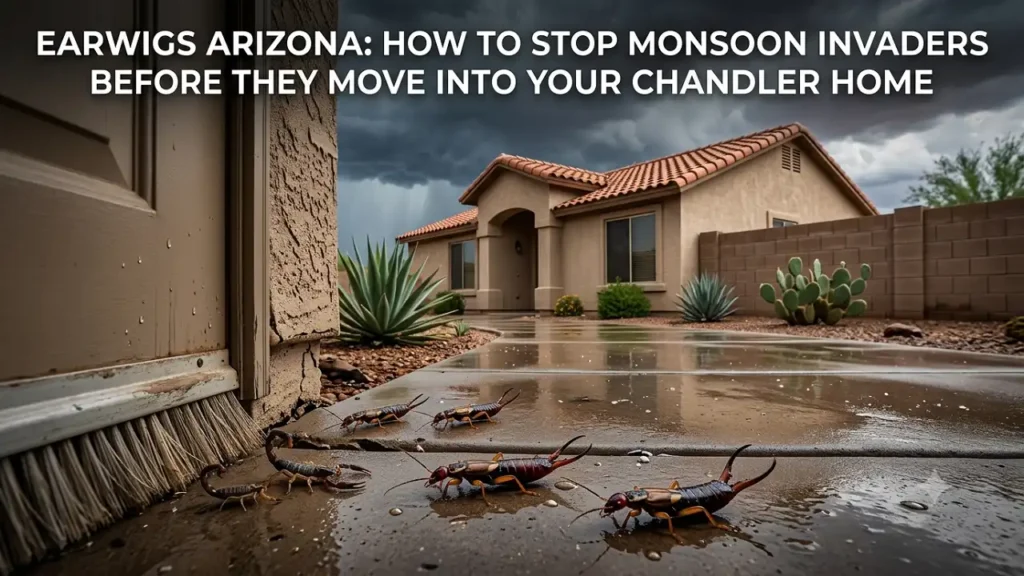
An earwig under your doormat is not a disaster. It is a moisture warning. Searches for earwigs Arizona spike every summer because monsoon rains, irrigated yards, and cool block walls create perfect hiding spots in a desert that should be too dry for them. What that means for your home: the earwigs you see on the patio are telling you where water is collecting, and that same moisture draws scorpions, crickets, and roaches. Fix the moisture, and you solve several pest problems at once.
Our general pest control services target that root cause instead of just spraying the bugs you can see.
Key Takeaways
- Earwigs are harmless to people but signal excess moisture around your foundation, mulch, or irrigation lines.
- Activity peaks from July through September in the Valley, when monsoon humidity drives earwigs toward porch lights and door gaps.
- Moisture control plus a perimeter barrier stops most infestations. Indoor spraying alone rarely solves the problem.
What Are Earwigs?
Earwigs are nocturnal, scavenging insects with pincers on their rear end. They belong to the order Dermaptera (Greek for “skin wings”). Most species measure 1/4 to 1 inch long, with flattened, reddish-brown to black bodies and a pair of forceps-like pincers called cerci (rear appendages used for defense, mating, and capturing prey).
They eat decaying plant matter, small insects, fungi, and sometimes tender seedlings. Earwigs hide during the day and feed at night. That is why most homeowners only notice them when they flip on a garage light at 10 p.m.
Your next step: grab a flashlight and check under one patio pot tonight.
Earwig Identification Guide: Common Species in Arizona
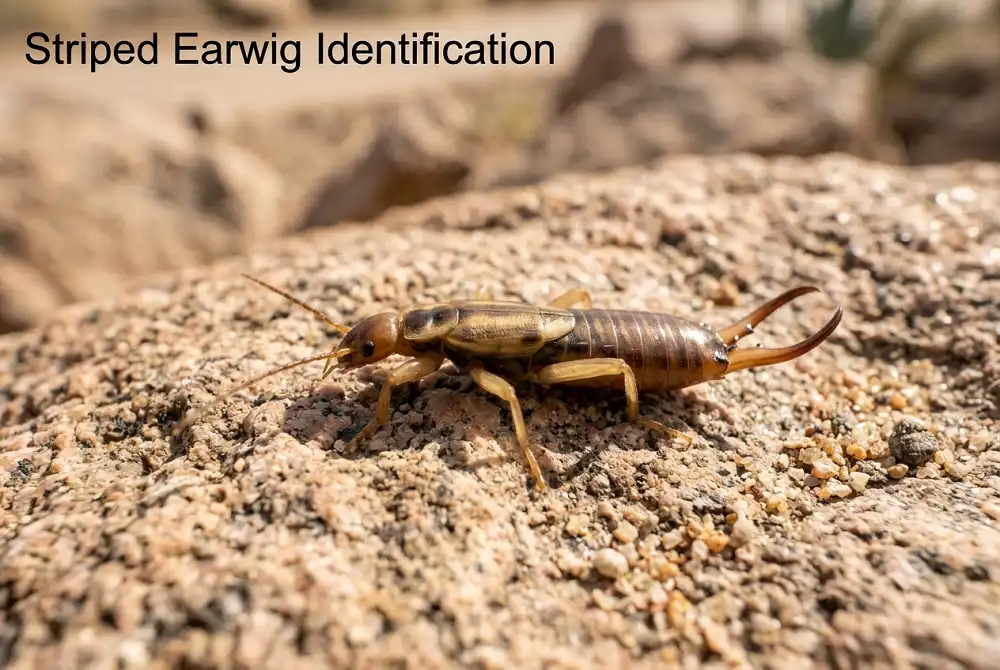
Three species account for most local sightings. Most earwigs Arizona homeowners report belong to the striped earwig, the ring-legged earwig, or the European earwig. On recent service calls in Chandler, striped earwigs have been the most common by far, especially near bright exterior lighting.
| Species | Size | Color & Markings | Where We Find Them | Key Behavior |
|---|---|---|---|---|
| Striped earwig (Labidura riparia) | Up to 1 inch | Tan with two dark stripes on the back | Sandy soil, desert landscaping, near lights | Strongly attracted to porch and garage lights |
| Ring-legged earwig (Euborellia annulipes) | About 1/2 inch | Dark brown to black, pale rings on legs | Under pots, mulch, and debris | Wingless; spreads through potted plants |
| European earwig (Forficula auricularia) | 1/2 to 5/8 inch | Reddish-brown body, pale legs | Irrigated gardens, lawns, flower beds | Chews seedlings, flowers, and soft fruit |
| Maritime earwig (Anisolabis maritima) | About 3/4 inch | Shiny black, wingless | Rare locally; damp, sheltered spots | Mostly a scavenger |
Male vs. Female Earwigs
Pincer shape tells you the sex. Males have curved, caliper-shaped pincers. Females have straighter pincers that sit closer together.
| Feature | Male | Female |
|---|---|---|
| Pincer shape | Strongly curved | Straight, nearly parallel |
| Role in colony | Mates, then leaves | Guards eggs and young nymphs |
| Eggs laid | None | About 20 to 80 per clutch, depending on species |
Female earwigs show unusual parental care. They clean and guard their eggs in underground nests until the nymphs hatch. One undisturbed nest under a wet planter can produce dozens of new earwigs in a few weeks.
Your next step: photograph one specimen next to a coin so you (or we) can confirm the species.
Check Also: Can Pest Control Spray in Rain? Protect Your Chandler Home
Why Arizona Attracts Earwigs
Arizona attracts earwigs because homeowners create moisture the desert lacks. Desert heat should limit them. For earwigs, Arizona neighborhoods offer drip irrigation, shaded mulch beds, and cool masonry that mimic the damp habitats they need.
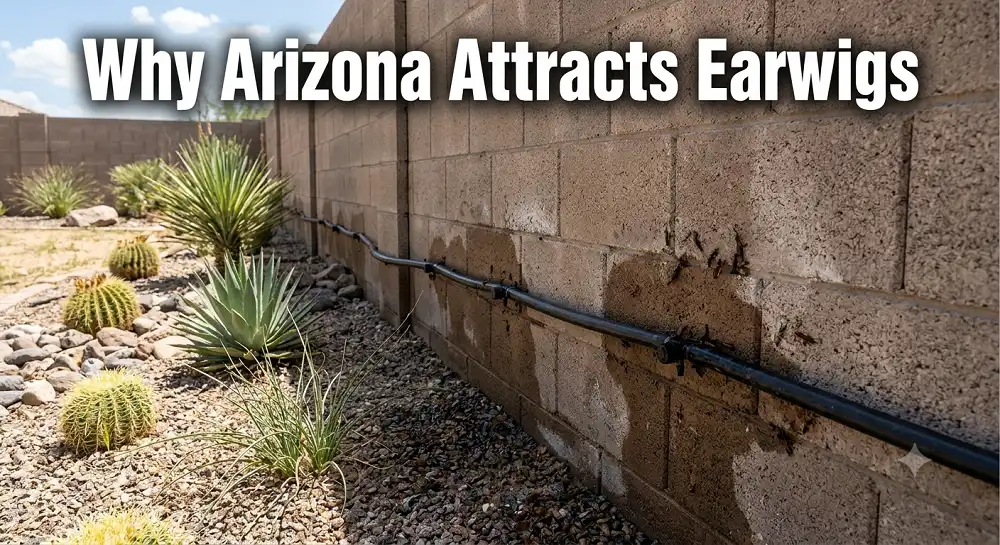
Our exterminators frequently see this in Arizona block-wall homes. The base of the wall stays shaded and damp. Granite rock traps humidity underneath. Sprinkler overspray soaks the bottom course of block every morning.
| Attractant | Why It Draws Earwigs | How Common in the Valley |
|---|---|---|
| Drip and sprinkler irrigation | Keeps soil damp around foundations | Very common |
| Mulch, bark, and leaf litter | Provides cool, dark daytime shelter | Common in front yards |
| Block walls and pavers | Hold moisture in joints and at the base | Nearly universal |
| Bright porch and garage lights | Attract striped earwigs and their insect prey | Very common |
| Potted plants and planters | Damp soil and drainage holes create nests | Common on patios |
| Leaky hose bibs and AC condensate lines | Constant drip points near walls | Common, often overlooked |
| Monsoon storms | Flood nests and push earwigs to higher, drier ground (your home) | Every summer |
Your next step: walk your foundation at 7 a.m. and note every spot that is still wet.
Seasonal Activity in Arizona
Earwig activity follows heat and humidity. Our earwigs Arizona service calls peak in July through September, right when monsoon storms roll through the East Valley. Winter activity drops sharply but never fully stops in irrigated yards.
| Season | Months | Activity Level | What We See in the Field |
|---|---|---|---|
| Winter | Dec – Feb | Low | Adults overwinter in soil; eggs laid in nests |
| Spring | Mar – May | Moderate | Nymphs hatch; activity grows in watered beds |
| Early summer | June | Moderate | Dry heat pushes earwigs deep under rock and mulch |
| Monsoon | July – Sept | High | Rains flood nests; earwigs swarm patios, garages, and entryways |
| Fall | Oct – Nov | Moderate to declining | Earwigs seek indoor shelter as nights cool |
The Monsoon Surge
Monsoon rain floods earwig nests and drives them toward shelter. Heavy storms saturate soil within minutes. Earwigs climb out and head for dry, protected spaces, which often means under doors, into garages, and behind baseboards.
If you’ve spent a summer in the Valley, this pattern makes complete sense. The same storms trigger cricket blooms, roach movement, and scorpion activity. Earwigs are often the first visible sign that a property has a moisture problem bigger than one pest.
Your next step: schedule a perimeter treatment in late June, before the first monsoon storm.
How Earwigs Get Inside: Common Entry Points
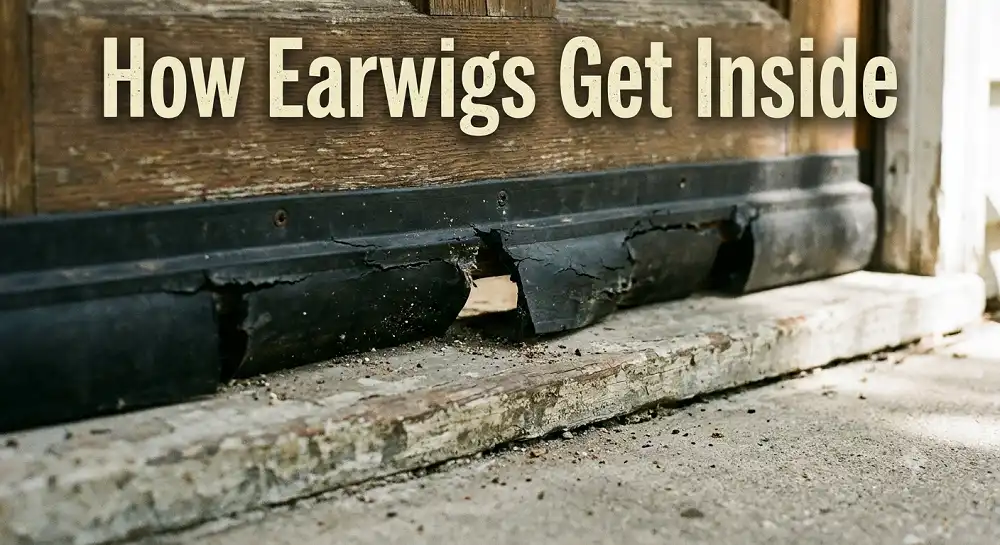
Earwigs enter through gaps at ground level. Their flat bodies slip through openings as thin as a credit card. Once inside, they hide in damp bathrooms, laundry rooms, and under kitchen sinks.
| Entry Point | Why It Works for Earwigs | Fix |
|---|---|---|
| Worn door sweeps | Gaps at the threshold | Replace sweep; add threshold seal |
| Garage door seals | Cracked rubber bottoms | Install new bottom seal and side weatherstripping |
| Weep screeds and stucco cracks | Direct path from soil to wall voids | Seal cracks; keep soil 4 to 6 inches below screed |
| Plumbing and utility penetrations | Open gaps around pipes | Caulk or foam around lines |
| Sliding door tracks | Damp, debris-filled channels | Clean tracks; check weep holes |
| Potted plants brought indoors | Earwigs ride in the soil | Inspect and dry pots before moving inside |
| Foundation cracks | Cool, damp access points | Seal with masonry caulk |
Sealing gaps works best when paired with moisture pest prevention. You remove the reason earwigs want in, then close the doors they use. Our moisture pest prevention service combines both steps in one visit.
Your next step: slide a sheet of paper under each exterior door. If it passes through easily, replace the sweep.
Check also: Scorpion Pest Control Gilbert AZ: How to Protect Your Home
Health and Property Risks
Earwigs are a nuisance, not a danger. The good news about earwigs Arizona homes see: they carry no known diseases, have no venom, and do not damage structures the way termites do.
That said, they still cause problems:
| Risk Area | Level | Details |
|---|---|---|
| Human health | Very low | Can deliver a mild pinch when handled; rarely breaks skin |
| Pets | Very low | Not toxic if eaten |
| Structure | None | Do not chew wood or drywall |
| Gardens | Moderate | European earwigs chew seedlings, basil, marigolds, and soft fruit |
| Odor | Low to moderate | Some species release a foul-smelling liquid when crushed |
| Indicator of other pests | High | Damp conditions that attract earwigs also attract scorpions, roaches, and crickets |
The Ear Myth
Earwigs do not crawl into human ears to lay eggs. The name likely comes from Old English “ear wicga,” meaning ear beetle, and from the shape of their hind wings. Doctors report insects in ears occasionally, but earwigs show no special preference for them.
Your next step: treat earwigs as a moisture signal, and inspect for other pests in the same spots.
Signs of an Earwig Problem
An infestation shows up in predictable places. Watch for these clues:
- Clusters under doormats, patio pots, or garden hoses in the morning
- Ragged holes in flower petals, basil leaves, or young vegetable seedlings
- Earwigs in bathtubs, sinks, or laundry rooms, especially after rain
- Large numbers near porch lights at night
- A sharp, unpleasant odor when you disturb a group
- Dead earwigs along baseboards or garage door thresholds
Seeing more than five or six indoors in a week usually means an outdoor population is pressing against your foundation.
Your next step: place two rolled-up damp newspapers near your foundation overnight and count what you find in the morning.
DIY Earwig Control: What Works
Light earwigs Arizona problems often respond to DIY steps. The key is removing moisture and trapping adults before they breed.
- Reduce watering. Water lawns and beds early in the morning so soil dries by evening.
- Clear debris. Rake mulch, leaves, and grass clippings at least 12 inches back from the foundation.
- Set newspaper traps. Roll damp newspaper, place it in beds at night, and dump it into soapy water at sunrise.
- Build oil traps. Fill a shallow container with soy sauce and vegetable oil. Earwigs crawl in and drown.
- Apply diatomaceous earth. Sprinkle food-grade DE along dry entry points. It loses effectiveness when wet.
- Swap lighting. Replace white porch bulbs with yellow “bug” bulbs or warm LEDs.
- Vacuum indoor earwigs. Empty the canister outdoors right away.
Pros and Cons of DIY
Pros:
- Low cost, often under $30
- Works well for small, seasonal outbreaks
- Uses low-toxicity methods safe around kids and pets
Cons:
- Does not reach nests under rock, block walls, or slabs
- Diatomaceous earth fails after monsoon rain
- Traps catch adults but miss eggs and nymphs
- Store-bought sprays can repel earwigs into wall voids instead of killing them
According to the EPA’s integrated pest management guidelines, combining non-chemical methods with targeted, lower-risk treatments produces better long-term results than pesticides alone. That principle drives every earwig plan we build.
Your next step: run newspaper traps for three nights to measure how large your population really is.
DIY vs. Professional Treatment
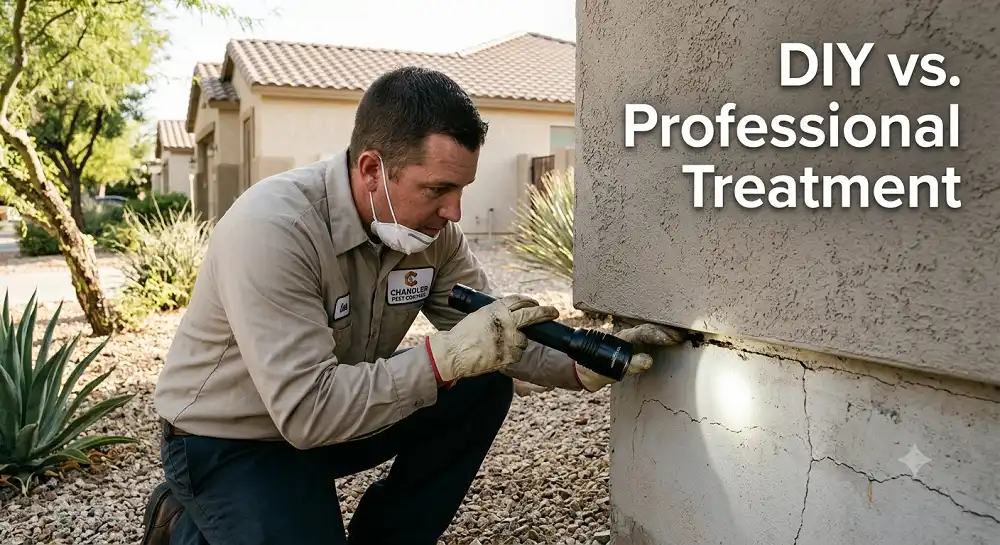
Professional treatment reaches places DIY cannot. DIY handles visible adults. Professional service targets nests, harborage zones, and entry points with longer-lasting products.
| Factor | DIY Treatment | Professional Treatment |
|---|---|---|
| Upfront cost | $10 – $50 | $125 – $300 initial visit |
| Time to results | 2 to 4 weeks, inconsistent | 3 to 10 days |
| Reaches nests | Rarely | Yes, including under rock and along block walls |
| Monsoon durability | Low; washes away | Weather-resistant granules and residuals |
| Treatment lifespan | Days to 2 weeks | 60 to 90 days per application |
| Moisture assessment | Guesswork | Full inspection of irrigation and drainage |
| Other pests addressed | No | Yes, including scorpions, crickets, and roaches |
| Product safety | Varies; risk of misuse | Licensed, label-compliant application |
| Best for | A few earwigs, short-term | Recurring or indoor infestations |
Your next step: if DIY traps still fill up after two weeks, move to professional treatment.
Check also: Air Conditioner Insects: How to Protect Your Chandler Home From Costly HVAC Damage
How We Treat Earwigs at Chandler AZ Pest Control
Our process targets moisture first and earwigs second. We treated a Gilbert home last August where a single leaking drip emitter behind an oleander hedge was feeding a colony of hundreds. Spraying alone would never have fixed it.
- Inspect the property. We check irrigation, drainage, mulch depth, lighting, and every ground-level gap.
- Identify the species. Striped, ring-legged, and European earwigs each need slightly different targeting.
- Correct moisture sources. We flag leaks, overspray, and drainage issues and show you how to fix them.
- Apply a perimeter barrier. We treat the foundation, block wall bases, and entry points with a weather-resistant residual.
- Place granular baits. We spread earwig-specific granules in mulch beds and under rock where nests hide.
- Treat indoor hot spots. We apply targeted products in wall voids, plumbing chases, and baseboards if needed.
- Seal entry points. We recommend or install door sweeps, caulk, and weatherstripping.
- Follow up. We return within 30 days if activity continues, at no extra charge under our service guarantee.
Your next step: write down where you see earwigs most often so our technician can start there.
Treatment Cost Comparison
Pricing for earwigs Arizona treatment varies by property size, severity, and whether you bundle services. The figures below reflect typical East Valley market ranges in 2026. We provide transparent, upfront quotes before any work begins.
| Service Option | Typical Cost Range | Coverage | Lifespan | Best For |
|---|---|---|---|---|
| DIY traps and DE | $10 – $50 | Visible adults only | Days to 2 weeks | Light, short-term outbreaks |
| One-time earwig treatment | $125 – $250 | Exterior perimeter + hot spots | 60 to 90 days | Single seasonal flare-up |
| Initial general pest service | $150 – $300 | Interior + exterior, multiple pests | 60 to 90 days | First-time customers |
| Quarterly pest plan | $95 – $150 per visit | Year-round coverage, free re-treats | Ongoing | Most Valley homeowners |
| Monthly pest plan | $45 – $75 per month | Heavy-pressure properties | Ongoing | Homes near desert washes or golf courses |
| Exclusion and sealing | $200 – $600+ | Door sweeps, caulking, weatherstripping | Years | Recurring indoor invasions |
What Affects Your Price
- Home square footage and lot size
- Severity of the infestation
- Landscaping type: heavy mulch and grass cost more to treat than granite
- Bundled pests: adding scorpions or crickets often lowers the per-pest cost
- Exclusion work needed at doors, garage, and stucco
Quarterly plans almost always cost less over a year than repeated one-time treatments.
Your next step: request a free inspection quote so you compare real numbers, not estimates.
Check Also: How Often Should Pest Control Be Done in Arizona Homes?
Prevention Checklist: Steps to Pest-Proof Your Home
Prevention beats treatment for earwigs Arizona properties every time. Work through this checklist each spring and again before monsoon season.
Yard and Landscaping
- Water early in the morning, never at night
- Fix leaking drip emitters, hose bibs, and sprinkler heads
- Pull mulch back 12 inches from the foundation
- Rake leaves, clippings, and debris weekly during monsoon season
- Trim shrubs and ground cover so they do not touch walls
- Raise potted plants on stands so drainage holes stay dry
Structure and Entry Points
- Replace worn door sweeps and garage door seals
- Caulk gaps around pipes, wires, and vents
- Seal stucco cracks and foundation gaps
- Keep soil below the weep screed by 4 to 6 inches
- Install screens on vents and weep holes
Lighting and Moisture Indoors
- Swap to yellow or warm LED bulbs at entry doors
- Turn off unneeded exterior lights at night
- Run bathroom fans to cut indoor humidity
- Fix leaks under sinks and around water heaters
- Redirect AC condensate lines away from the foundation
For more research-based tips on desert landscaping and household pests, the University of Arizona Cooperative Extension publishes free, locally relevant guides.
Your next step: print this checklist and complete the yard section this weekend.
When to Call a Pro
Call a professional when earwigs keep showing up indoors. A few outdoors is normal. Daily indoor sightings, large clusters, or activity that returns after DIY efforts mean a nest is close to your foundation.
Call us if you notice:
- More than five earwigs indoors per week
- Earwigs in multiple rooms, not just near one door
- Garden damage that keeps spreading despite traps
- Activity that returns within days of DIY treatment
- Other moisture pests, like crickets or scorpions, in the same areas
Earwig problems rarely travel alone. The damp, shaded spots that shelter earwigs are the same spots where we find bark scorpions hunting. That is why many customers pair earwig treatment with our scorpion control service, especially in homes backing onto desert or canal areas. Gaps that let earwigs inside also let mice in. Our rodent exclusion work closes those openings permanently. And because excess soil moisture draws subterranean termites to foundations, we often recommend an inspection for termite treatments when we find chronic irrigation problems.
Your next step: call us for an inspection if you check two or more boxes above.
FAQs
Are earwigs dangerous in Arizona?
No. Earwigs have no venom and carry no diseases. They can pinch if handled, but the pinch rarely breaks skin.
Why do I see so many earwigs at night?
Most earwigs Arizona residents find at night are striped earwigs, which are strongly drawn to porch and garage lights. Switching to yellow bulbs cuts activity noticeably.
Why are earwigs worse after monsoon storms?
Heavy rain floods underground nests. Earwigs move to higher, drier ground, which often means your patio, garage, or entryway.
Do earwigs damage homes?
No. They do not chew wood, drywall, or wiring. They can damage seedlings, flowers, and soft fruit in gardens.
Can earwigs live inside my house?
Only briefly. They need high moisture and usually die within days in dry, air-conditioned rooms unless they find a leak.
Do earwigs really crawl into ears?
No. That is a myth. There is no evidence they seek out human ears.
How long does professional treatment last?
A professional perimeter treatment typically lasts 60 to 90 days. Quarterly plans keep protection continuous.
Is earwig treatment safe for kids and pets?
Yes, when applied by a licensed technician following label directions. We use targeted, low-risk products and tell you when treated areas are dry.
Protect Your Home From Earwigs Year-Round
Earwigs are a moisture problem first and a pest problem second. Dry out the yard, seal the gaps, and earwig numbers drop fast. Add a weather-resistant perimeter treatment before monsoon season, and you stop the late-summer surge before it reaches your door.
At Chandler AZ Pest Control, we serve homeowners and property managers across Chandler, Gilbert, Mesa, and Tempe with jargon-free explanations, transparent pricing, and treatments built for the desert. We would rather fix the leak than sell you extra sprays.
Chandler AZ Pest Control
1425 W. Frye Rd, Chandler, AZ 85224
www.chandlerazpestcontrol.com
Your next step: book a free earwig inspection before the next monsoon storm hits.