
One bark scorpion on the bathroom tile at 2 a.m. will change how you think about bugs. So, how often should pest control be done in Arizona? For most Valley homes, the honest answer is every 1 to 3 months, not once a year. Our desert heat, irrigated yards, and mild winters keep pests active all 12 months.
At Chandler AZ Pest Control, our crews treat homes across Chandler, Gilbert, Mesa, and Tempe every week. The right schedule protects your family, your foundation, and your budget. A missed visit in July can cost far more than the visit itself. Our general pest control service builds each plan around your property, not a generic calendar.
Key Takeaways
- Quarterly service (every 3 months) is the baseline for most Arizona homes with low to moderate pest activity.
- Bi-monthly or monthly visits fit scorpion-prone, desert-edge, older, or previously infested homes, plus restaurants and multifamily buildings.
- Monsoon season (June 15 to September 30) and the spring warm-up are the two windows where skipping service hurts the most.
So, How Often Should Pest Control Be Done in Arizona?
Most single-family homes do well with quarterly service. Homes near open desert, homes with a scorpion history, and businesses that handle food usually need more. Here’s how we match frequency to property type.
| Property Type | Recommended Frequency | Visits Per Year | Why |
|---|---|---|---|
| Newer home, interior subdivision, low activity | Quarterly | 4 | Tight seals, fewer entry points |
| Average Chandler/Gilbert home with grass and citrus | Quarterly + monsoon touch-up | 4-5 | Irrigation draws ants, roaches, crickets |
| Home backing desert, canal, wash, or golf course | Bi-monthly | 6 | Constant pest migration from open land |
| Home with active scorpion problem | Monthly (Mar-Oct), bi-monthly in winter | 9-10 | Scorpions breed and travel fast in heat |
| Older home (pre-1995) with block walls | Bi-monthly | 6 | Settling cracks, worn seals, hollow block cells |
| Apartments and HOA common areas | Monthly | 12 | Shared walls spread roaches and bed bugs |
| Restaurants, food service, healthcare | Monthly or more | 12-24 | Health codes and audits demand records |
| Snowbird or vacation home | Quarterly + pre-arrival service | 4-5 | Empty homes invite rodents and spiders |
Bottom line: quarterly is the floor, not the ceiling, for most Arizona properties.
Why Arizona Pest Pressure Never Takes a Day Off
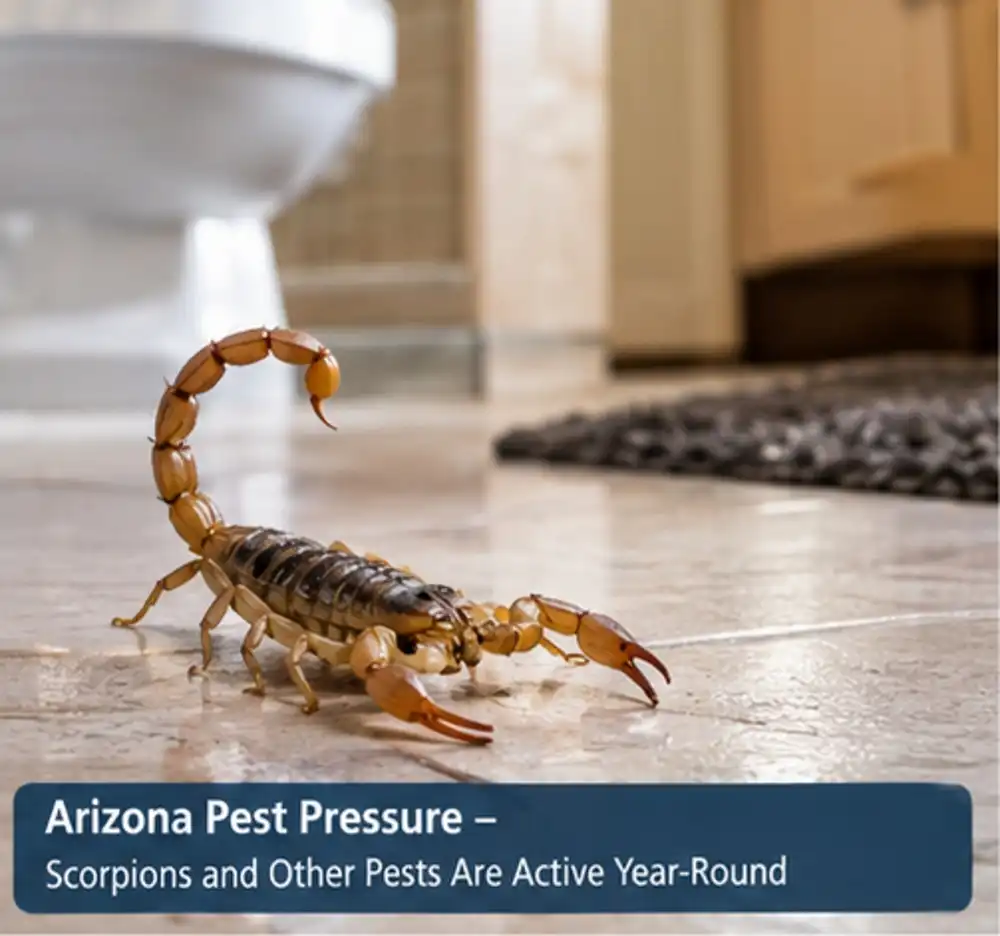
Back East, a hard frost resets the bug calendar every year. Arizona never gets that reset. Valley lows rarely stay below freezing for long, so cockroaches, ants, and scorpions stay active through winter. Then summer heat above 110°F drives them indoors, hunting for water and shade.
Three local factors make our pest pressure unique:
- Irrigation everywhere. Drip lines, lawns, and citrus trees create green oases. Pests follow the water.
- Block-wall construction. Our exterminators frequently see this in Arizona block-wall homes: scorpions living inside hollow block cells and under wall caps.
- Constant development. New construction in south Chandler and Queen Creek pushes displaced scorpions and rodents into established neighborhoods.
The University of Arizona Cooperative Extension publishes practical research on desert pests like the Arizona bark scorpion, the most venomous scorpion in North America. That’s exactly why the question of how often should pest control be done in Arizona gets a different answer here than in Ohio or Oregon.
Key takeaway: our climate gives pests 12 active months, so your protection needs to last all year too.
Check Also: Stop Invaders: AZ Centipedes and Millipedes Pest Services
Treatment Frequency by Pest Type
Different pests need different schedules. A German cockroach infestation and an annual termite inspection run on completely different clocks. Use this table as your quick reference.
| Pest | Recommended Frequency | Typical Treatment Method | Why This Schedule Works |
|---|---|---|---|
| General perimeter pests (ants, spiders, crickets) | Quarterly | Exterior barrier + interior spot treatment | Matches residual life of perimeter products |
| Arizona bark scorpions | Monthly or bi-monthly (Mar-Oct) | Perimeter spray, dusting, sealing, blacklight checks | Scorpions resist many products and climb walls |
| German cockroaches | 2-3 visits, 10-14 days apart, then monthly until clear | Gel baits, IGRs, crack-and-crevice | Breaks the egg-hatch cycle |
| American cockroaches | Quarterly, monthly in summer | Drain, sewer, and irrigation box treatment | Summer heat drives them out of sewers |
| Subterranean termites | Annual inspection; treatment as needed | Liquid soil barrier or bait stations | Colonies work silently underground |
| Roof rats | Weekly trap checks during removal, then quarterly | Trapping + exclusion | Rats learn quickly and reinfest fast |
| Bed bugs | 2-3 treatments 10-14 days apart, or heat + follow-up | Heat, targeted products, encasements | Eggs survive single treatments |
| Mosquitoes | Monthly during monsoon | Standing water removal, larvicide, foliage treatment | Rain refills breeding sites weekly |
| Kissing bugs | Quarterly + spring sealing | Exclusion, pack rat nest removal | Peak activity May through July |
Mini-wrap: the pest you’re fighting sets the pace, not the calendar on your fridge.
Arizona’s Seasonal Pest Schedule
Every season in the Valley brings its own set of invaders. Smart homeowners time their visits to hit pests before they peak. Here’s the seasonal map we use for our own routes.
| Season | Months | Main Pests | What We Focus On | Service Priority |
|---|---|---|---|---|
| Winter | Dec-Feb | Roof rats, German roaches, spiders | Rodent exclusion, interior baiting, attic checks | Moderate |
| Spring | Mar-May | Scorpions emerge, ants, bees, kissing bugs, termite swarms | Barrier treatment, sealing, swarm inspections | High |
| Early Summer | Jun | Scorpions peak, American roaches, crickets | Monthly scorpion visits, drain treatments | Very High |
| Monsoon | Jun 15-Sep 30 | Termites, flying ants, crickets, mosquitoes, beetles | Re-treating washed barriers, swarm response | Highest |
| Fall | Oct-Nov | Roof rats in citrus, spiders, late scorpions, crickets | Rodent prevention, web removal, perimeter refresh | High |
Monsoon Bug Blooms: Our Busiest Stretch of the Year
The first big storm of the season flips a switch. On recent service calls in Chandler, we’ve found cricket swarms piled against garage doors and flying termites clustered around porch lights. The rain doesn’t just wake pests up; it also washes away barrier treatments.
Here’s what blooms after monsoon rains:
- Termite swarmers leave colonies to start new ones, often at dusk after a storm.
- Crickets multiply fast and become scorpion food, which pulls scorpions closer to your walls.
- Flying ants appear in huge numbers after the first heavy soak.
- Mosquitoes breed in flowerpot saucers, clogged gutters, and green pools.
- Scorpions flee flooded burrows and move indoors.
If you’ve spent a summer in the Valley, this scorpion prevention strategy makes complete sense: add an extra visit between July and September.
Winter Isn’t a Free Pass
Many homeowners pause service in December. That’s often when roof rats start nesting in attics, drawn by ripening citrus. German roaches also thrive indoors, since your heater keeps them comfortable.
Key takeaway: spring and monsoon need the tightest schedule, but winter still needs coverage.
Check Also: Fix Pest Control Common Failures in Older Homes in Chandler
Monthly vs. Bi-Monthly vs. Quarterly Service

When homeowners ask us, “How often should pest control be done in Arizona?” we start by walking the property. The yard, the walls, and your pest history tell us more than any rule of thumb. Here’s how the three main schedules compare.
| Factor | Monthly | Bi-Monthly | Quarterly |
|---|---|---|---|
| Visits per year | 12 | 6 | 4 |
| Best for | Heavy scorpions, businesses, apartments | Desert-edge and older homes | Newer homes, low activity |
| Barrier gaps | Almost none | Short gaps in peak heat | Gaps possible in monsoon |
| Scorpion control | Excellent | Good | Fair |
| Cost per visit | Lowest | Moderate | Highest |
| Annual cost | Highest | Moderate | Lowest |
| Response to new pests | Fastest | Fast | Slower |
Monthly Service Pros and Cons
Pros:
- Continuous barrier with no breakdown gaps
- Catches new activity within weeks
- Ideal for scorpion-heavy properties and food businesses
Cons:
- Highest annual cost
- More scheduling for busy households
- Overkill for low-pressure newer homes
Bi-Monthly Service Pros and Cons
Pros:
- Strong balance of coverage and cost
- Fits most desert-edge homes perfectly
- Keeps barriers fresh through summer heat
Cons:
- May need an extra monsoon visit
- Not enough for active roach infestations
Quarterly Service Pros and Cons
Pros:
- Lowest yearly cost
- Works well for newer, well-sealed homes
- Easy to align with seasonal shifts
Cons:
- Barriers can fade before the next visit in July and August
- Slower to catch scorpion buildup
- Rarely enough for homes with a pest history
Mini-wrap: pick the schedule that matches your real pest pressure, then adjust after one full year.
Factors That Change Your Ideal Frequency
There’s no single answer to how often should pest control be done in Arizona for every address. Two houses on the same street can need very different plans. These are the factors our technicians weigh on every inspection.
| Factor | Lower Frequency Needed | Higher Frequency Needed |
|---|---|---|
| Home age | Built within the last 10 years, tight seals | Built before 1995, cracked stucco, worn weatherstripping |
| Location | Interior of a mature subdivision | Backs to desert, canal, wash, farmland, or golf course |
| Pest history | No prior infestations | Past scorpions, roaches, rodents, or termites |
| Landscaping | Gravel, sparse plants | Dense citrus, palms, ivy, woodpiles, bougainvillea |
| Irrigation | Drip set correctly | Leaks, overwatering, soggy beds near walls |
| Nearby construction | None | Active building within a mile |
| Occupants | Adults only | Babies, toddlers, pets, seniors, asthma sufferers |
| Property type | Single-family | Multifamily, restaurant, medical, school |
Home Age and Construction Style
Older Chandler homes often have weep screeds with gaps, unsealed block walls, and settled slabs. Each gap is an open door for a scorpion. We usually recommend bi-monthly service plus sealing for these properties.
Location and Surroundings
Homes along the Gila River Indian Community boundary, near canals, or by open desert face constant pressure. Pests migrate in from undisturbed land daily. If you’re finding more than a few scorpions a month, our scorpion control program adds blacklight inspections, dusting, and exclusion work to your regular visits.
Pest History
A home that had German roaches or termites before is more likely to see them again. Past infestations leave pheromone trails, hidden egg cases, or untreated soil. We plan tighter follow-ups for these homes during the first year.
Key takeaway: your address, build year, and past problems matter more than any generic schedule.
Arizona Pest Identification Guide
Knowing what you’re seeing helps you decide how urgent the problem is. Some pests are a nuisance.
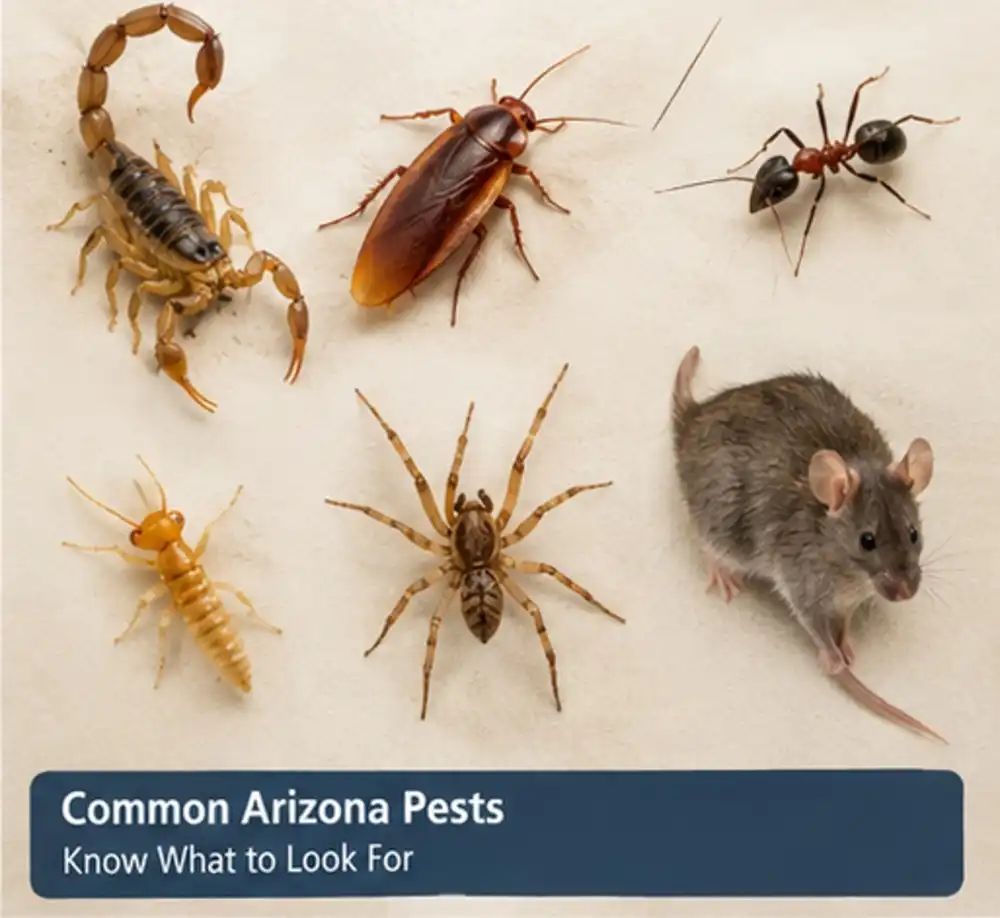
Others threaten your health or your home’s structure.
| Pest | What It Looks Like | Where We Find It | Risk Level | Peak Season |
|---|---|---|---|---|
| Arizona bark scorpion | 2-3 in, tan-yellow, slender tail, glows under UV | Block walls, weep screeds, attics, bathtubs | High (painful sting, dangerous for kids) | Mar-Oct, peak in monsoon |
| Subterranean termite | Cream-colored workers, mud tubes on walls | Foundations, stucco, baseboards | High (structural damage) | Spring and monsoon swarms |
| Roof rat | Slender, dark, 13-18 in with tail | Palm trees, citrus, attics | High (chewed wires, disease) | Fall and winter |
| German cockroach | ½ in, tan, two dark stripes | Kitchens, bathrooms, appliances | High (asthma triggers, bacteria) | Year-round indoors |
| American cockroach | 1.5-2 in, reddish-brown | Drains, sewers, irrigation boxes | Moderate | Summer |
| Black widow | Shiny black, red hourglass | Garages, block walls, patio furniture | Moderate-High | Spring-Fall |
| Arizona brown spider | Tan, violin mark on back | Cluttered storage, garages, woodpiles | Moderate | Warm months |
| Kissing bug | ¾-1 in, dark with orange edge bands, cone head | Near pack rat nests, drawn to lights | Moderate (allergic reactions) | May-July |
| Harvester ant | Large, red, big cleared mounds | Yards, gravel areas | Moderate (painful sting) | Spring-Fall |
| Bed bug | Apple-seed size, reddish-brown | Mattress seams, headboards, couches | Moderate (bites, stress) | Year-round |
| Field cricket | 1 in, dark brown-black | Garages, patios, near lights | Low (but feeds scorpions) | Monsoon |
Mini-wrap: if a high-risk pest shows up, don’t wait for your next scheduled visit. Call right away.
How Long Pest Treatments Last in Desert Heat
Here’s something most national pest articles miss. Arizona sun, extreme heat, and monsoon rain break down treatments faster than in milder climates. That’s a big reason Valley schedules run tighter.
| Treatment Type | Typical Lifespan in Arizona | What Shortens It |
|---|---|---|
| Exterior perimeter spray (full sun) | 30-60 days | UV light, 110°F+ surfaces |
| Exterior spray (shaded eaves, under patios) | 60-90 days | Dust, irrigation overspray |
| Interior crack-and-crevice | 60-90+ days | Heavy cleaning, mopping |
| Granular yard bait | 2-4 weeks | Sprinklers, monsoon rain |
| Gel cockroach bait | 1-3 months | Drying out, competing food |
| Wall void dust | 6-12 months | Moisture |
| Liquid termite soil barrier | Often 5-10 years (per product label) | Soil disturbance, grading, new landscaping |
| Termite bait stations | Ongoing with regular monitoring | Missed station checks |
On recent service calls in Chandler, we’ve tested west-facing walls at over 150°F in July. Barrier products simply don’t last as long under that kind of heat. That’s why we often shorten intervals during summer.
Key takeaway: your treatment lifespan should drive your schedule, and Arizona shortens it.
DIY vs. Professional Pest Control
Big-box stores sell plenty of sprays and granules. Some work fine for a stray ant trail. But DIY rarely changes the answer to how often should pest control be done in Arizona, because retail products wear off just as fast.
| Factor | DIY | Professional Service |
|---|---|---|
| Product strength | Retail, lower concentration | Professional-grade, non-repellent options, growth regulators |
| Scorpion results | Limited; scorpions tolerate many sprays | Targeted products plus sealing and dusting |
| Upfront cost | $20-$60 per product | $100-$250 initial service |
| Typical annual cost | $150-$400 | $400-$900 for most homes |
| Your time | 2-4 hours per application | None |
| Termite capability | Not effective for colonies | Licensed through the Arizona Department of Agriculture |
| Safety risk | Higher (overapplication, wrong product) | Trained, label-compliant application |
| Guarantee | None | Free re-service between visits |
| Inspection | Guesswork | Trained eyes find entry points and nests |
DIY Pros and Cons
Pros:
- Low upfront cost
- Fast response to a single sighting
- Good for light maintenance between pro visits
Cons:
- Weaker products and shorter residual
- Easy to misidentify the pest
- No help for termites, bed bugs, or heavy scorpion activity
- Risk to kids and pets if labels aren’t followed
If you do treat on your own, always read and follow the product label. The EPA’s consumer pest control and pesticide safety guidance explains how to choose, store, and apply products safely around your family. The label is the law, even in your own backyard.
Mini-wrap: DIY works as a supplement, not a substitute, for professional service in the desert.
Pest Control Cost Breakdown in the East Valley

Many homeowners search “how often should pest control be done in Arizona” hoping the answer is rarely. The reality is that regular visits usually cost less than emergency treatments. At Chandler AZ Pest Control, we believe in transparent pricing, so here are typical ranges we see across the East Valley.
Recurring Service Costs
| Service Schedule | Typical Cost Per Visit | Visits Per Year | Typical Annual Cost |
|---|---|---|---|
| Initial service (first visit) | $100-$250 | 1 | One-time |
| Quarterly general service | $90-$150 | 4 | $360-$600 |
| Bi-monthly general service | $60-$95 | 6 | $360-$570 |
| Monthly general service | $40-$70 | 12 | $480-$840 |
| Monthly scorpion service | $75-$125 | 12 | $900-$1,500 |
Specialty and One-Time Treatment Costs
| Service | Typical Cost Range | How Often |
|---|---|---|
| Termite inspection | $0-$150 | Annually |
| Liquid termite treatment | $800-$2,500 | Once, with warranty renewals |
| Termite bait station install | $1,200-$3,000 | Once, plus monitoring fees |
| Rodent exclusion | $300-$1,500 | Once, plus follow-up checks |
| Bed bug heat treatment | $1,000-$3,000 | Usually once, plus inspection |
| German roach cleanout | $200-$500 | 2-3 visits |
| Scorpion sealing | $500-$2,500 | Once, plus touch-ups |
Actual pricing depends on home size, lot size, and pest severity.
What Skipping Service Can Cost
| Problem Left Untreated | Potential Cost |
|---|---|
| Termite damage to framing | $3,000-$10,000+ in repairs |
| Roof rat chewed wiring or AC lines | $500-$3,000+ |
| Heavy roach infestation cleanout | $500-$1,200 |
| Scorpion sting ER visit | Hundreds to thousands in medical bills |
Key takeaway: a $40-$150 visit is cheap insurance against four-figure repairs.
Pest-Proof Your Home Between Visits: Maintenance Checklist
Your pest control schedule works best when the house helps. These steps make every treatment last longer and work harder. Run through this list each season.

Outside the Home:
- Seal gaps in block walls, wall caps, and weep screeds with caulk or foam.
- Install door sweeps and replace worn weatherstripping.
- Trim citrus and palms at least 3 feet from your roofline.
- Pick up fallen fruit quickly to cut off roof rat food.
- Move woodpiles and debris away from walls.
- Fix irrigation leaks and water early in the morning.
- Screen vents and roof openings with fine mesh.
- Switch porch lights to yellow LED bulbs to attract fewer crickets and moths.
Inside the Home:
- Store food in sealed containers, including pet food.
- Fix dripping faucets and leaky AC drain lines.
- Declutter garages and storage closets.
- Shake out shoes and towels during scorpion season.
- Inspect secondhand furniture before bringing it inside.
- Vacuum often along baseboards and under appliances.
Mini-wrap: small habits close the gaps that treatments alone can’t cover.
Troubleshooting: Still Seeing Bugs After Treatment?
Seeing a few pests after service doesn’t always mean failure. Our technicians walk customers through this step-by-step check all the time. Here’s what to do.
- Wait 10-14 days. Pests often move around more as products work. Seeing dying bugs is normal.
- Check what you’re seeing. Use the pest ID table above. A cricket isn’t the same as a German roach.
- Look for water sources. Leaks, damp cabinets, and overwatered beds draw pests in.
- Check recent changes. New landscaping, construction, or monsoon rain can wash barriers away.
- Avoid over-the-counter sprays on treated areas. Some repel pests and break the professional treatment.
- Note the location. Track where you see pests most. This helps us find the entry point.
- Call for a re-service. Most plans, including ours, include free re-treatment between visits.
- Ask about adjusting frequency. If problems keep returning, your home may need a tighter schedule.
Key takeaway: persistent sightings are a signal to adjust, not a reason to give up.
Specialty Pests Follow Their Own Schedule
General service handles most crawling insects. But some pests need dedicated treatment plans with their own timelines. Here’s how we approach the big three.
Roof Rats
Roof rats are a growing problem in Chandler, Gilbert, and Mesa, especially around citrus trees and palms. Trapping alone rarely solves it. Our rodent exclusion service seals roof gaps, vent openings, and utility lines, then follows up with weekly trap checks until activity stops.
- Removal phase: weekly visits for 2-4 weeks
- Exclusion phase: one-time sealing of entry points
- Monitoring phase: quarterly checks, especially fall and winter
Bed Bugs
Bed bugs don’t care how clean your home is. They hitchhike in from hotels, airports, and used furniture. Our bed bug eradication process uses heat treatment or targeted applications, followed by inspection to confirm they’re gone.
- Heat treatment: usually 1 visit plus a follow-up inspection
- Conventional treatment: 2-3 visits, 10-14 days apart
- Prevention: mattress encasements and travel inspections
Termites
Subterranean termites cause damage quietly for months or years before you notice. Every Arizona home should get an annual termite inspection. Swarms during spring and monsoon are a clear warning sign.
Mini-wrap: specialty pests need a specialty schedule, layered on top of your regular service.
FAQs
How often should pest control be done in Arizona for apartments and condos?
Monthly is best for multifamily buildings. Shared walls and plumbing let German roaches and bed bugs travel between units. Individual renters can often rely on the property’s schedule, plus a quick call if activity appears.
Is quarterly service enough for scorpions?
Usually not for homes with active scorpion problems. Scorpions need monthly or bi-monthly treatment from March through October, plus sealing and dusting. Quarterly works only for homes with rare sightings.
Do I need pest control in the winter?
Yes. Arizona winters are mild, so roaches, spiders, and roof rats stay active. Winter visits also set up a strong barrier before spring scorpion season.
Is professional pest control safe for kids and pets?
When applied according to the label, yes. We use targeted applications and explain re-entry times. Most exterior treatments are safe once dry, which typically takes 30 minutes to a few hours.
Will monsoon rain wash away my treatment?
Heavy rain can reduce exterior residual, especially granular products. That’s why we often add a post-storm visit during monsoon. Interior and wall void treatments stay protected.
Do new homes need pest control?
Yes. New construction disturbs soil, which displaces scorpions and termites. Many new homes come with a builder’s termite pretreatment, but general pest and scorpion activity often spikes in the first 1-2 years.
How often should I get a termite inspection?
Once a year for most homes. Get one sooner if you see mud tubes, discarded wings, or swarmers near windows.
Do I need to be home during service?
Not usually for exterior visits. We need access for interior treatments, attic inspections, and specialty services. We’ll always confirm what’s needed before we arrive.
Should snowbirds keep service while they’re away?
Yes. Empty homes are quiet, dark, and undisturbed, which is exactly what rodents and spiders want. We recommend quarterly service plus a pre-arrival visit before you return.
Build a Pest Control Schedule That Fits Your Home
The answer to how often should pest control be done in Arizona comes down to your location, home age, pest history, and the season. For most homes, quarterly is the starting point. Desert-edge and scorpion-prone homes often need bi-monthly or monthly care.
Here’s your next-step checklist:
- Review the factor table above and note where your home falls.
- Track sightings for 2-4 weeks, including pest type and location.
- Schedule a professional inspection to set your baseline.
- Plan extra coverage for spring and monsoon.
- Book your annual termite inspection, and ask about our termite treatment options if we find activity.
- Reassess after 12 months and adjust frequency based on results.
At Chandler AZ Pest Control, we give straight answers, clear pricing, and plans built on years of Valley field experience. We’d rather set you up with the right schedule than the most expensive one. Visit us at 1425 W. Frye Rd, Chandler, AZ 85224, or reach out to schedule your inspection today.