
Your AC runs nearly nonstop from May to October. That steady hum makes it one of the most attractive pest shelters on your property. Air conditioner insects like ants, cockroaches, wasps, and scorpions use the cool, damp spaces inside your system to nest, feed, and slip indoors. The cost goes beyond a few bugs. It means fried contactors, clogged drain lines, and pests riding your ductwork into bedrooms.
Pairing smart HVAC upkeep with residential pest control protects both your comfort and your wallet.
Key Takeaways
- Ants and moisture pests cause the most AC repairs in Chandler. Ants short out electrical contacts, and roaches breed near condensate lines.
- Sealing line-set gaps, vents, and duct seams blocks most indoor entry. These are the openings we find on nearly every service call.
- Monsoon season (July to September) brings the biggest pest surge. Schedule inspections and HVAC checks before the storms hit.
Why Air Conditioner Insects Thrive in Chandler Homes
The Sonoran Desert pushes pests toward three things: shade, water, and shelter. Your AC system offers all three. Outdoor condensers sit in shaded side yards. Drain lines drip water daily. Attic ductwork stays cooler than the surrounding air.
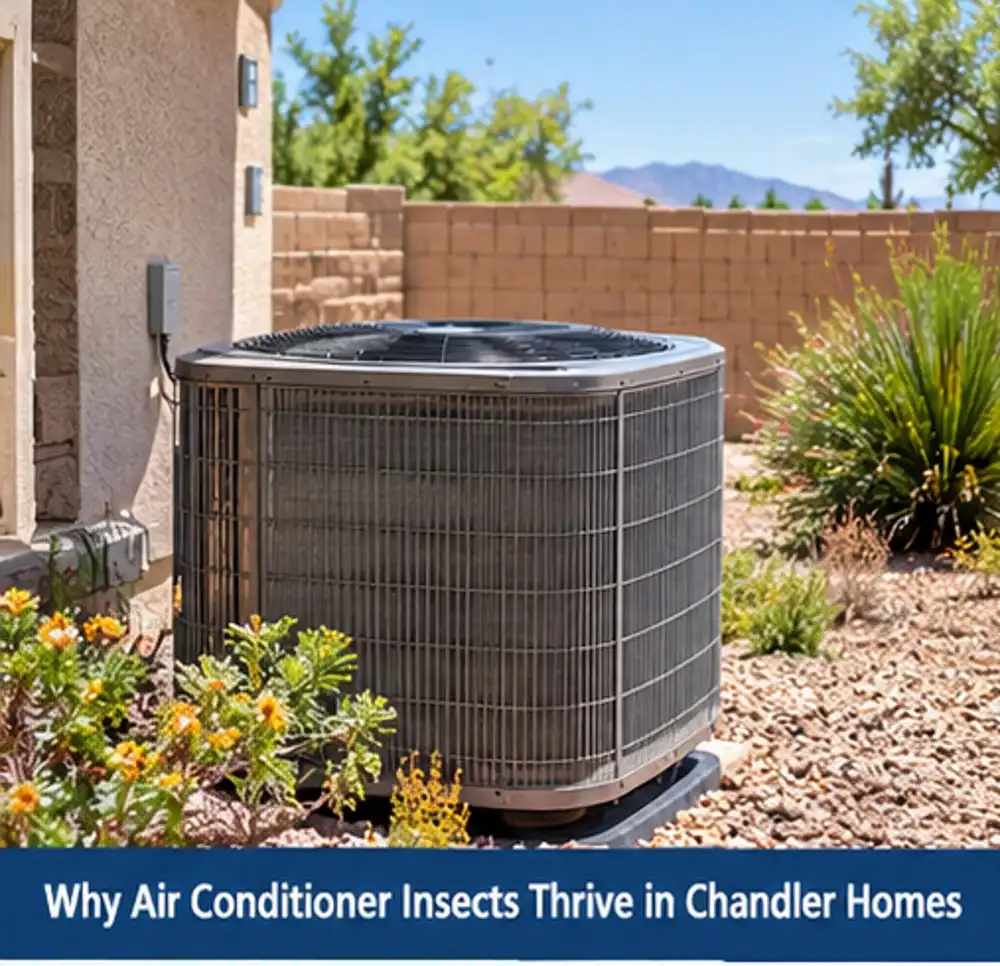
On recent service calls in Chandler, our team found ant colonies packed inside condenser cabinets. We also pulled German cockroaches out of air handler closets and mud dauber nests from exterior vents. These pests aren’t random visitors. They move in because your system meets their survival needs.
The Three Main Attractions
- Moisture: Condensate drain lines and evaporator coils create damp zones in a dry climate.
- Warmth and cover: Condenser housings, wiring compartments, and attic insulation provide hiding spots.
- Easy access: Gaps around refrigerant lines, torn duct tape, and loose vent covers act as open doors.
Check Also: How Often Should Pest Control Be Done in Arizona Homes?
Arizona Home Features That Make It Worse
Our exterminators frequently see this in Arizona block-wall homes. AC units often sit in a narrow strip between the house and the block wall. That space traps heat, debris, and pests. Landscape rock and drip irrigation nearby add even more harborage.
| Home Feature | Why It Attracts Pests | Pests Most Affected |
|---|---|---|
| Block wall near condenser | Shade, debris buildup, wall voids | Scorpions, spiders, crickets |
| Landscape rock | Cool hiding spots under stones | Scorpions, roaches |
| Drip irrigation by AC | Constant ground moisture | Ants, roaches, termites |
| Attic ductwork | Warm, dark, insulated | Roaches, rodents, spiders |
| Rooftop package units | Exposed, rarely inspected | Birds, wasps, bees |
Pest Identification Guide: What’s Living in Your AC?
Knowing which air conditioner insects you’re facing tells you how serious the problem is. Some pests are a nuisance.
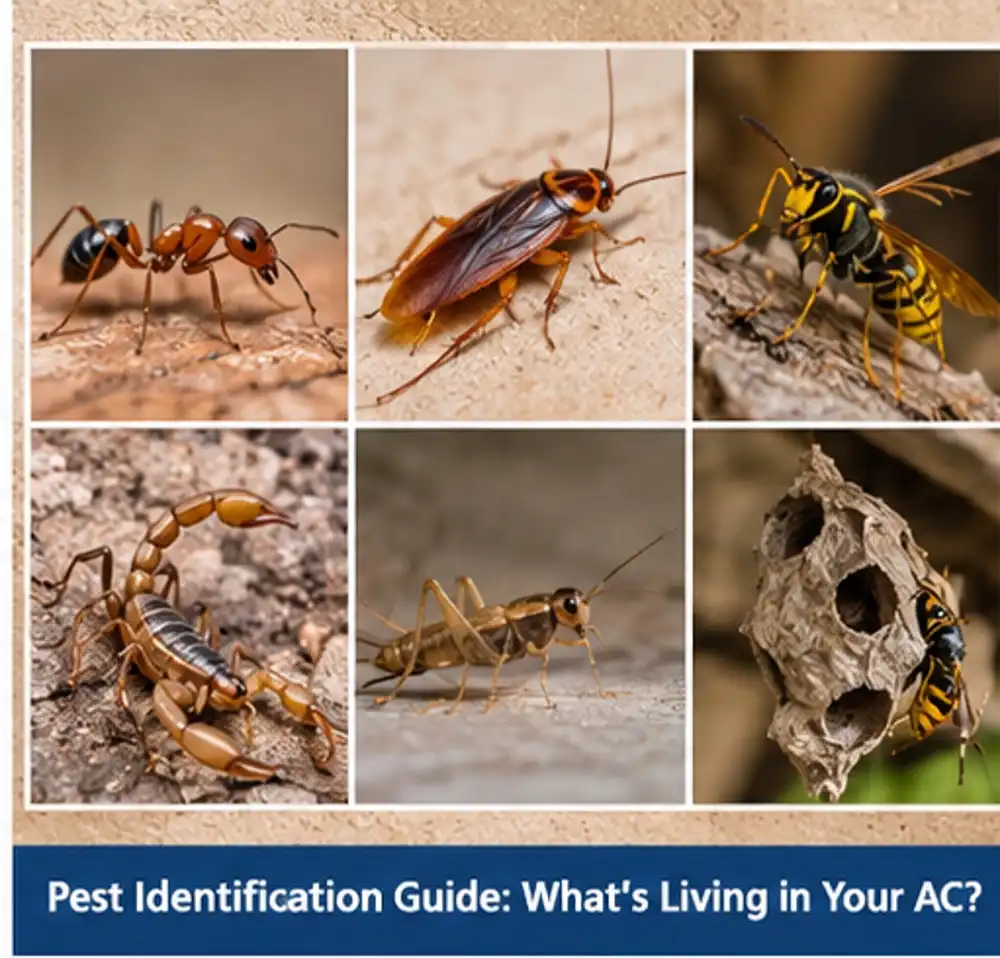
Others cause electrical damage or health risks.
| Pest | Where You’ll Find It | Damage Risk | Health Risk | Warning Signs |
|---|---|---|---|---|
| Ants (fire, Argentine, pavement) | Condenser contactor, wiring box | High: shorts contacts, stops cooling | Low to medium (fire ant stings) | Dead ant piles near unit, AC won’t start |
| American cockroaches | Drain lines, ducts, air handler closet | Medium: contaminates ducts | Medium: allergens, bacteria | Droppings near vents, musty odor |
| German cockroaches | Indoor air handlers, return vents | Medium | High: asthma triggers | Small roaches near vents, egg cases |
| Arizona bark scorpions | Line-set gaps, return vents, attic | Low | High: painful, medically significant sting | Sightings near vents, ceilings, walls |
| Wasps and mud daubers | Vent hoods, condenser fans, eaves | Medium: blocks airflow | Medium to high: stings | Mud tubes, paper nests, buzzing |
| Africanized honey bees | Inside condenser or rooftop units | Medium | Very high: aggressive swarms | Steady bee traffic in and out |
| Crickets | Around base of condenser | Low | Low | Chirping near unit at night |
| Spiders (black widow) | Condenser corners, attic ducts | Low | Medium to high (widow bites) | Messy webs low to the ground |
| Termites | Wood near AC pad, wall penetrations | High: structural damage | Low | Mud tubes on stucco or slab |
| Rodents (roof rats, mice) | Insulation, wiring, ducts | Very high: chewed wires, fire risk | High: droppings, disease | Gnawed lines, droppings, odors |
Why Ants Love Your Condenser
This surprises many homeowners. Ants are drawn to the electrical field around AC contactors. When one ant gets zapped, it releases chemical signals. More ants rush in. Soon the contactor jams with bodies, and your AC stops cooling on a 112-degree day.
It is one of the most common summer repair calls in the Valley.
Check Also: Stop Invaders: AZ Centipedes and Millipedes Pest Services
Signs You Have Air Conditioner Insects
Most homeowners don’t spot a problem until the AC fails or bugs show up indoors. Watch for these early clues of air conditioner insects before they turn into costly repairs.
Outdoor Unit Warning Signs
- Piles of dead ants around the condenser base
- Mud tubes or nests on the housing or fan guard
- Clicking or humming, but the fan won’t spin
- Chewed insulation on the refrigerant line set
- Debris, webs, or droppings inside the cabinet
Indoor Warning Signs
- Roaches near return vents or the air handler closet
- Scorpions appearing on ceilings or near vents
- A musty or foul smell when the system kicks on
- Reduced airflow from certain registers
- Water pooling near the condensate drain
Quick Troubleshooting Steps
- Turn off power at the disconnect before looking inside any unit.
- Check the contactor area for ant buildup (or call an HVAC tech).
- Inspect the drain line exit for roaches or standing water.
- Remove vent covers and look for droppings or webs.
- Trace the line set where it enters the wall for gaps.
- Note where and when pests appear. This helps us find the source fast.
How Pests Get Inside Through Your HVAC System
Your HVAC system is connected to the outdoors in several places. Each connection point is a potential entry.
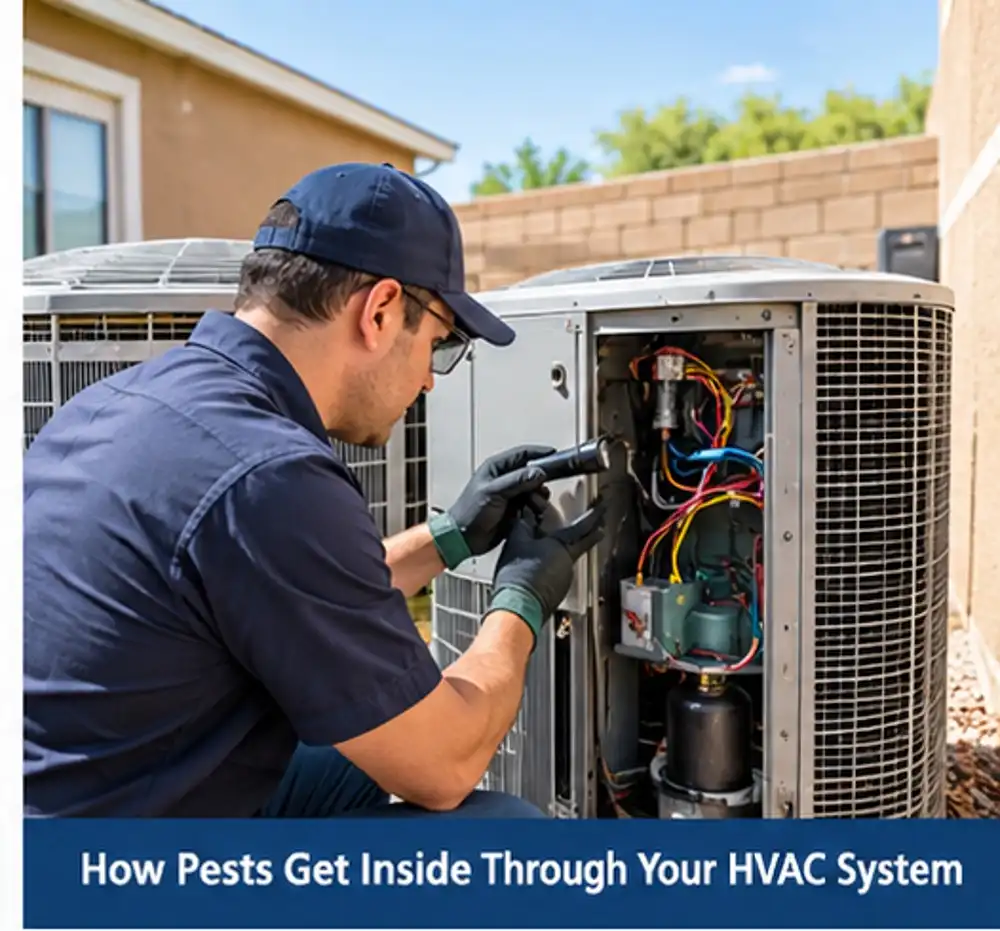
Our service crews notice the same weak spots again and again.
| Entry Point | How Pests Use It | Fix |
|---|---|---|
| Refrigerant line set penetration | Gaps around pipes lead into wall voids | Seal with copper mesh and sealant |
| Condensate drain line | Roaches crawl up the open pipe | Install a drain line insect guard |
| Torn or loose ductwork | Attic pests enter the air stream | Repair seams with mastic or foil tape |
| Return air vents | Scorpions and roaches drop in from attic | Secure covers, seal edges |
| Exterior wall vents | Wasps and birds nest inside | Add fine mesh screens |
| Electrical conduit | Ants and scorpions follow wiring | Seal conduit openings |
The Condensate Drain Problem
Cockroaches are one of the biggest threats to your indoor air quality. They climb right up open drain lines, following the moisture. From there, they reach the air handler and spread through your home. Our cockroach control service targets these moisture zones with baits and exclusion, not just surface sprays.
Ductwork Leaks Matter More Than You Think
Leaky ducts don’t just waste cooling. They pull in attic air, dust, and insects. If you see bugs blowing from a vent, a duct leak is a likely cause. Sealing ducts improves both efficiency and pest protection.
Check Also: Fix Pest Control Common Failures in Older Homes in Chandler
Seasonal Pest Activity: When Your AC Is Most at Risk
If you’ve spent a summer in the Valley, you know pest pressure shifts with the weather. The monsoon brings the biggest jump. Rain triggers termite swarms, cricket booms, and roach movement almost overnight.
Here’s how air conditioner insects cycle through the year in Chandler.
| Season | Months | Top AC Pests | Activity Level | What to Do |
|---|---|---|---|---|
| Winter | Dec to Feb | Rodents, spiders | Low to moderate | Seal line sets, check attic for rodents |
| Spring | Mar to Apr | Bees, wasps, ants | Rising | Inspect for nests, schedule AC tune-up |
| Early summer | May to Jun | Scorpions, ants, roaches | High | Clear debris, start perimeter treatment |
| Monsoon | Jul to Sep | Roaches, crickets, termites, ants | Very high | Check drain lines, inspect after storms |
| Fall | Oct to Nov | Scorpions, rodents | Moderate | Seal gaps before rodents move inside |
Monsoon Season Watch List
- Flooded drain lines after heavy rain draw roaches upward.
- Swarming termites target wood near damp AC pads.
- Crickets pile around condensers and attract scorpions that hunt them.
- Ant colonies relocate to dry spots, including your unit’s cabinet.
DIY vs. Professional Treatment
Some AC pest problems are simple to handle yourself. Others need trained hands. The table below compares both options for common air conditioner insects and related issues.
| Factor | DIY Approach | Professional Treatment |
|---|---|---|
| Cost upfront | Low ($20 to $80 in supplies) | Moderate (see cost table below) |
| Pest identification | Guesswork | Accurate species ID |
| Treatment lifespan | Days to a few weeks | 60 to 90 days, plus follow-up |
| Electrical safety | Risky near live components | Trained, safe application |
| Source removal | Often misses the colony | Finds and treats the source |
| Exclusion work | Basic caulking | Full sealing of entry points |
| Risk of AC damage | High if spraying inside unit | Low |
| Best for | Light debris, minor ant trails | Infestations, stinging pests, rodents |
DIY Pros
- Low cost for minor issues
- Quick fixes like clearing debris
- Good for routine prevention
DIY Cons
- Spraying inside a condenser can damage coils and wiring
- Store-bought sprays often scatter colonies instead of killing them
- Stinging insects and Africanized bees pose serious safety risks
- Misidentified pests lead to wasted money
According to the EPA’s guidance on safe pest control, the safest approach starts with prevention and uses pesticides only when needed. We follow that same principle on every job.
Treatment Cost Comparison for Chandler Homeowners
At Pest Control Chandler AZ, we believe in transparent pricing. The ranges below reflect typical costs we see across Chandler, Gilbert, Mesa, and Tempe. Your actual quote depends on your property size, the pest involved, and what our inspection finds.

Knowing these numbers helps you see why stopping air conditioner insects early saves money.
| Service | Typical Cost Range | Lifespan / Frequency | Prevents |
|---|---|---|---|
| General pest inspection | $0 to $150 | One-time | Guesswork, wrong treatments |
| One-time pest treatment | $150 to $300 | 30 to 60 days | Active infestation |
| Recurring quarterly service | $100 to $150 per visit | Ongoing | Seasonal pest surges |
| Scorpion treatment and sealing | $150 to $400 | 60 to 90 days | Scorpions near vents and walls |
| Rodent exclusion | $300 to $1,200+ | Long-term | Chewed wiring, duct damage |
| Bee or wasp nest removal | $150 to $500 | One-time | Stings, blocked airflow |
| AC condenser cage or screening | $150 to $400 | Several years | Ants, birds, debris |
| HVAC tune-up | $80 to $200 | Twice a year | Clogged drains, early damage |
| Duct cleaning | $300 to $700 | Every 3 to 5 years | Pest debris, allergens |
What Pests Can Cost You in Repairs
| Pest-Related AC Damage | Typical Repair Cost |
|---|---|
| Contactor replacement (ant damage) | $150 to $400 |
| Chewed wiring repair (rodents) | $200 to $600 |
| Refrigerant line insulation repair | $100 to $350 |
| Clogged condensate line clearing | $75 to $250 |
| Duct section replacement | $300 to $1,500 |
| Water damage from blocked drain | $500 to $3,000+ |
Prevention almost always costs less than the repair.
Steps to Pest-Proof Your Air Conditioner
You don’t need to be an expert to cut down on AC pests. These steps cover the basics our team recommends to every Chandler homeowner.
Outdoor Unit Checklist
- Keep 2 feet of clearance around the condenser
- Remove landscape rock and leaf piles from the unit’s base
- Trim shrubs and citrus branches away from the housing
- Move drip emitters away from the AC pad
- Check the cabinet monthly for nests and ant activity
- Consider a protective cage with fine mesh
Indoor and Attic Checklist
- Change air filters every 1 to 3 months
- Seal gaps around the line set with copper mesh and sealant
- Install an insect guard on the condensate drain line
- Inspect and seal duct seams with mastic
- Secure vent covers tightly
- Keep the air handler closet clean and dry
Twice-Yearly Maintenance Plan
| Task | Spring (Mar to Apr) | Fall (Oct to Nov) |
|---|---|---|
| HVAC tune-up | ✔ | ✔ |
| Drain line flush | ✔ | ✔ |
| Pest perimeter treatment | ✔ | ✔ |
| Nest and hive check | ✔ | |
| Rodent entry sealing | ✔ | |
| Duct inspection | ✔ |
For local research on desert pests and home landscaping, the University of Arizona Cooperative Extension is a reliable resource. Their findings line up with what we see in the field.
When to Call a Professional
Some problems go past DIY. Call us if you notice any of the following:
- Scorpions showing up near vents or ceilings more than once
- Rodent droppings or chewed wires near your AC or in the attic
- A bee swarm or large wasp nest in or near your unit
- Roaches appearing near return vents despite cleaning
- Repeated AC failures linked to ant buildup
Scorpions Near Your Vents
Bark scorpions climb walls and squeeze through gaps as thin as a credit card. They often enter attics and drop through return vents. Our scorpion control service combines sealing, targeted treatment, and harborage reduction around block walls and rock beds.
Rodents in Your Ductwork
Roof rats are common across Chandler, especially near citrus trees. They chew refrigerant line insulation, wiring, and flex ducts. That creates fire risk and expensive repairs. Our rodent control service focuses on trapping, cleanup, and sealing entry points for good.
Bees and Wasps in Your Unit
Never try to remove a hive from an AC unit yourself. Many Arizona colonies are Africanized honey bees, which defend aggressively. Our bee and wasp control team handles nests safely and helps prevent new colonies from moving in.
FAQs
Can air conditioner insects come through my vents?
Yes. Roaches, scorpions, and spiders can enter through leaky ducts and loose vent covers. Sealing ducts and securing vents reduces this risk.
Why are ants swarming my outdoor AC unit?
Ants are attracted to the electrical field around contactors. They can jam the contacts and stop your system from cooling.
Should I spray bug spray inside my AC?
No. Sprays can damage coils and wiring. They also scatter colonies. Treat the area around the unit instead, or call a pro.
How often should I check my AC for pests?
Look monthly during summer. Schedule a pest inspection and HVAC tune-up each spring and fall.
Do swamp coolers attract more pests than AC units?
Often, yes. Evaporative coolers hold more water, which draws roaches, mosquitoes, and bees. They need extra attention during monsoon season.
Is professional pest treatment safe for kids and pets?
Yes, when applied correctly. We choose products with your household in mind and follow all label re-entry times.
Protect Your AC and Your Home This Season
Your air conditioner works hard in the Arizona heat. Pests know it too. Ants short out electrical parts. Roaches climb drain lines. Scorpions and rodents use your HVAC system as a highway indoors.
The good news is that most air conditioner insects are preventable. Start with three simple steps this week:
- Clear debris and rock from around your condenser.
- Check your drain line and vent covers for gaps.
- Schedule an inspection before the next monsoon storm.
At Chandler AZ Pest Control, we inspect first, explain everything in plain terms, and treat the real source. Your AC should keep you cool, not house pests. Call us at (844) 833-2064 to protect your Chandler, Gilbert, Mesa, or Tempe home today.