
A six-inch giant desert centipede racing across your tile floor at midnight is a very Arizona wake-up call. Professional AZ centipedes and millipedes pest services solve more than one creepy sighting. They target the moisture, hidden entry points, and prey insects that pull these crawlers inside. At Pest Control Chandler AZ, our team handles these calls every week. Many start with a single sighting and end with us finding a much bigger moisture or insect problem behind the walls. That is why we pair centipede control with routine general pest control services that cut off their food supply.
This article covers species identification, bite risks, seasonal patterns, prevention steps, real cost ranges, and when a professional treatment makes sense.
Key Takeaways
- Centipedes bite, millipedes don’t. Centipedes carry venom. Millipedes only release an irritating defensive fluid.
- Moisture is the root cause. Fix leaks, overwatering, and damp mulch, or no spray will last.
- Monsoon season brings the surge. Expect peak activity from July through September in the East Valley.
Why Arizona Homes Attract Centipedes and Millipedes
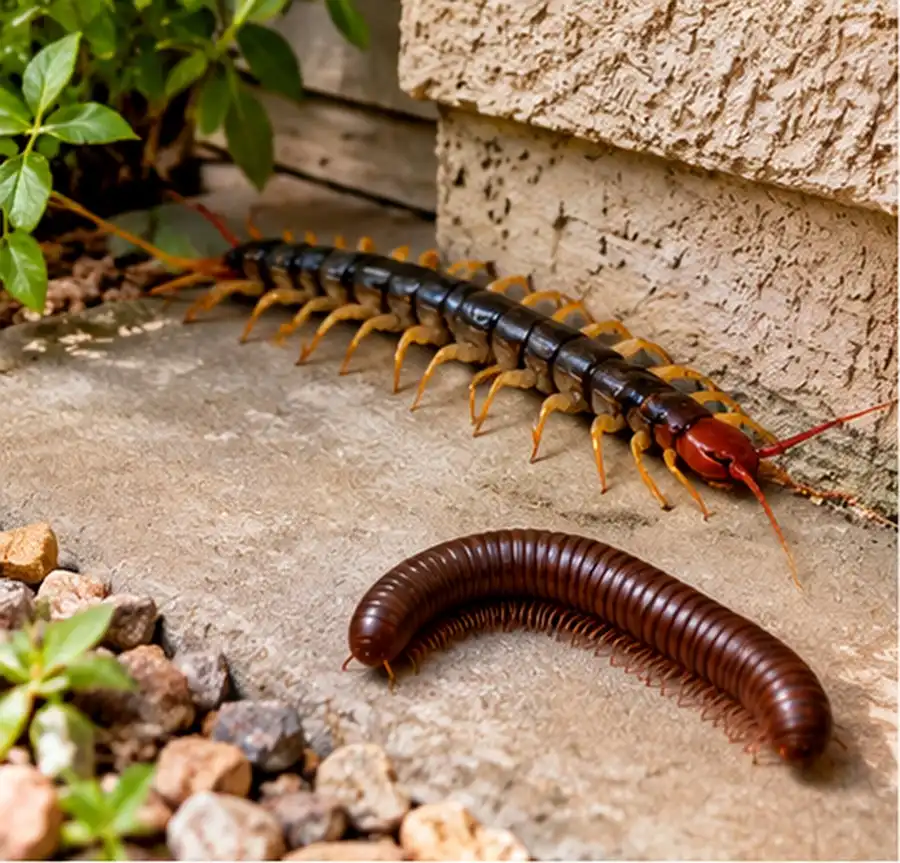
Arizona’s desert looks dry, but our neighborhoods are not. Drip irrigation, lush landscaping, and pool runoff create damp pockets these arthropods love. Both groups lose body moisture fast, so they hunt for cool, humid shelter.
On recent service calls in Chandler, we found most activity within three feet of the foundation. Wet gravel beds, rubber mulch, and stacked pavers hold moisture for days. Your yard may be doing more to invite them than the desert ever could.
The Main Drivers of Indoor Invasions
| Driver | What Happens | Where We See It Most |
|---|---|---|
| Excess moisture | Draws both groups toward the slab | Sprinkler heads near walls, leaky hose bibs |
| Monsoon flooding | Saturated soil forces them upward and inside | Low-lying yards, garages, patio doors |
| Extreme heat | Sends them seeking cool shelter | Block walls, garages, utility rooms |
| Abundant prey | Centipedes follow crickets, roaches, silverfish | Homes with untreated insect activity |
| Decaying plant matter | Feeds millipedes | Thick mulch, leaf litter, compost piles |
| Structural gaps | Provide easy entry | Door sweeps, weep screeds, plumbing penetrations |
Our exterminators frequently see this in Arizona block-wall homes. Gaps where the block wall meets the stucco become highways straight to your garage door seal.
Pest Identification Guide: Centipede vs. Millipede
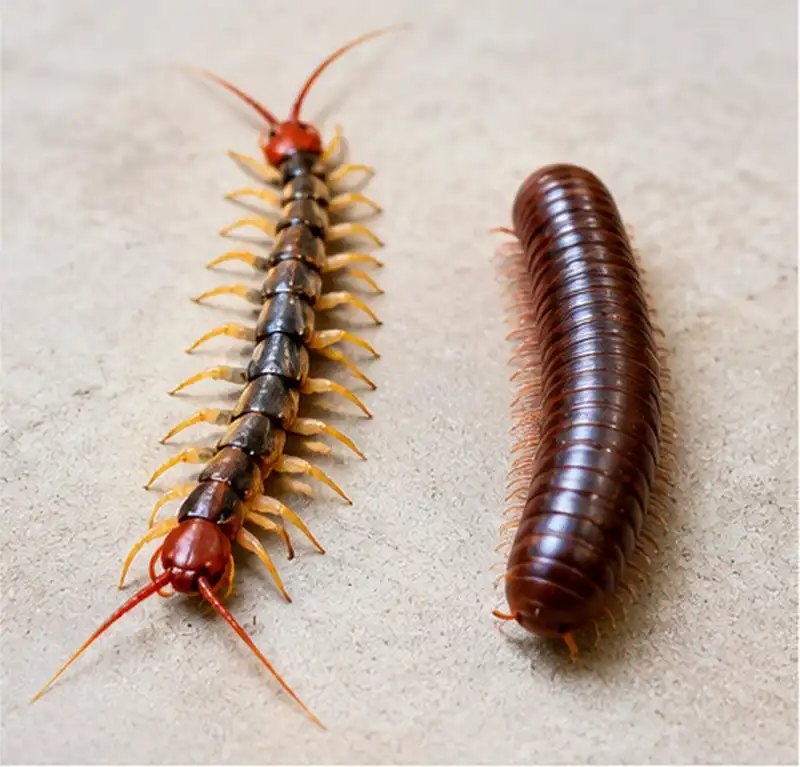
Many homeowners use these names interchangeably. They are very different animals with different risks and different treatment plans. Centipedes are fast predators. Millipedes are slow decomposers that eat rotting plant material.
| Feature | Centipedes | Millipedes |
|---|---|---|
| Legs per body segment | One pair | Two pairs |
| Body shape | Flattened, long antennae | Rounded, tube-like, short antennae |
| Speed | Very fast | Slow, steady crawl |
| Diet | Insects, spiders, small animals | Decaying leaves, mulch, plant debris |
| Defense | Venomous bite from front claws | Coils up, releases irritating fluid |
| Risk to people | Painful bite, possible swelling | Skin staining, eye irritation |
| Risk to home | Nuisance, signals other pests | Nuisance, may nibble seedlings |
Centipede venom comes from modified front legs called forcipules. Think of them as venom-loaded pincers right behind the head. Millipedes have none of that equipment.
Common Arizona Centipede Species
| Species | Size | Appearance | Notes From the Field |
|---|---|---|---|
| Giant desert centipede (Scolopendra heros) | 6 to 8 inches | Red or orange head, dark body, yellow legs | Largest in North America; most painful bite |
| Common desert centipede (Scolopendra polymorpha) | 4 to 7 inches | Tan or orange with dark bands | Most common large centipede in Valley homes |
| House centipede (Scutigera coleoptrata) | 1 to 1.5 inches | Gray-yellow, 15 pairs of very long legs | Lives indoors, eats roaches and silverfish |
| Stone centipedes (Lithobiomorpha) | Under 2 inches | Brown, stout body | Found under rocks and pavers |
| Soil centipedes (Geophilomorpha) | 1 to 3 inches | Thin, yellowish, worm-like | Live in moist soil, rarely seen indoors |
The giant desert centipede is often called the bark centipede online. That nickname causes confusion with bark scorpions, which are a separate and more serious pest. When we hear “bark centipede” on the phone, we always ask for a photo first.
Common Arizona Millipede Species
| Species | Size | Appearance | Notes From the Field |
|---|---|---|---|
| Desert millipede (Orthoporus ornatus) | 3 to 5 inches | Brown to reddish, smooth segments | Explodes in numbers after monsoon storms |
| Garden millipedes (various) | 1 to 2 inches | Dark brown or black | Common in flowerbeds and mulch |
| Greenhouse millipede (Oxidus gracilis) | About 1 inch | Flat-backed, brown | Found in potted plants and damp patios |
If you’ve spent a summer in the Valley, you’ve seen desert millipedes crossing sidewalks after a storm. They look alarming in large numbers. They are harmless to people if you leave them alone and avoid touching your eyes after handling one.
Health and Bite Risks: What You Need to Know
Most encounters end with a startled scream and nothing more. Still, a centipede bite deserves respect, especially around kids and pets.
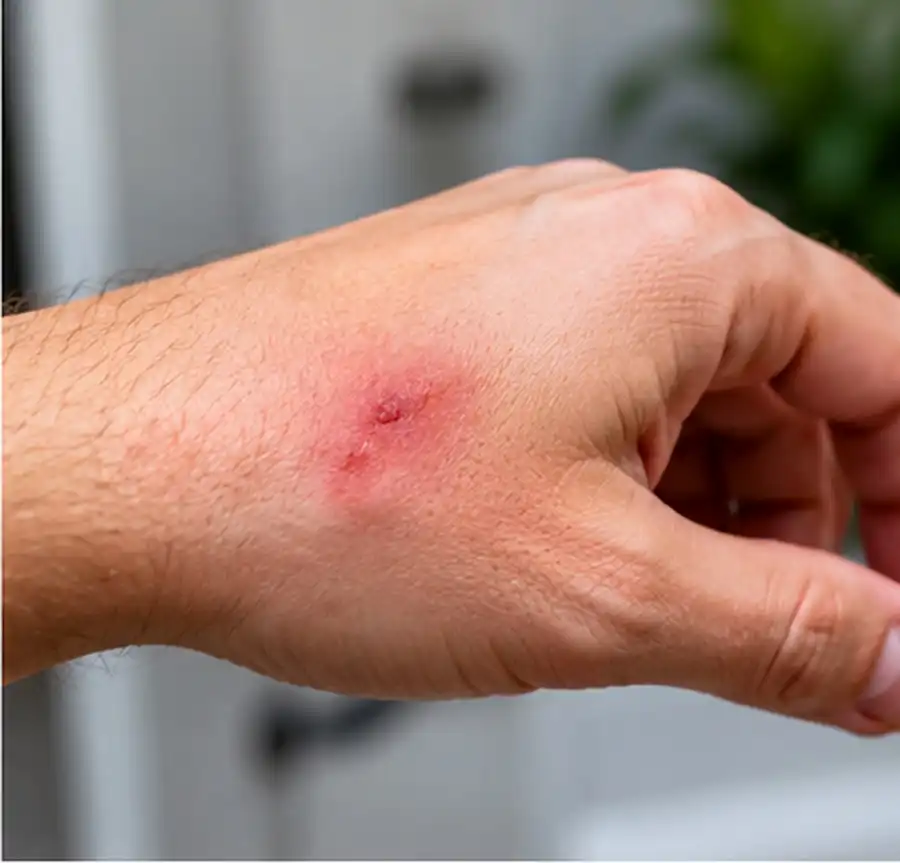
Centipede Bite Symptoms
- Sharp, burning pain at the bite site
- Redness and swelling lasting hours to a day or two
- Two small puncture marks from the front claws
- Rare allergic reactions with hives or trouble breathing
Deaths from North American centipede bites are extremely rare. The bigger concern is allergic response or secondary infection if the wound is not cleaned.
First-Aid Steps for a Centipede Bite
- Wash the area with soap and warm water.
- Apply a cold compress to reduce swelling.
- Use an over-the-counter pain reliever if needed.
- Watch for spreading redness or fever.
- Seek medical care right away for breathing issues, severe swelling, or bites on small children.
Millipede Contact Risks
- Defensive fluid can stain skin brown or purple
- Eye contact causes burning and irritation
- Pets may drool or paw at their mouth after biting one
Wash skin with soap and water right away. Flush eyes with clean water and call a doctor if irritation continues. Never rub your eyes after picking one up.
Seasonal Activity Guide for the East Valley
Timing matters for treatment scheduling. Our technicians track activity patterns across Chandler, Gilbert, Mesa, and Tempe every year.
| Season | Months | Centipede Activity | Millipede Activity | What We Recommend |
|---|---|---|---|---|
| Winter | Dec – Feb | Low; hiding deep in soil | Low | Seal gaps, trim vegetation |
| Spring | Mar – May | Rising as nights warm | Moderate in watered beds | Start perimeter treatments |
| Early Summer | June | Moving toward cool shelter | Low in dry heat | Check irrigation for leaks |
| Monsoon | July – Sept | Peak; flooding drives them indoors | Peak; mass emergences | Increase service frequency |
| Fall | Oct – Nov | Moderate, slowly declining | Declining | Clean up debris, re-treat perimeter |
This past monsoon season matched the pattern we see every year. After heavy storms, our phones lit up with millipede swarms on patios and centipedes in garages and bathtubs. The storm is the trigger, but moisture is the real cause.
What AZ Centipedes and Millipedes Pest Services Actually Include
A spray around the house is not a complete plan. Quality AZ centipedes and millipedes pest services combine inspection, habitat correction, targeted treatment, and exclusion. Here is the process we follow at Chandler AZ Pest Control.
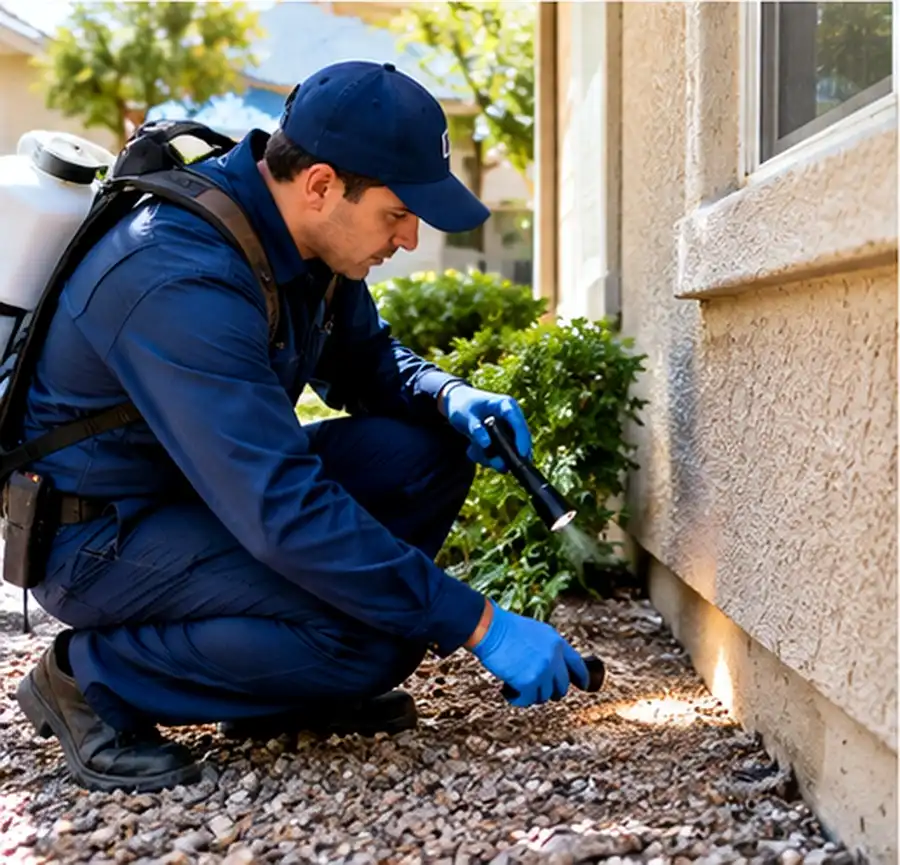
Our Treatment Process
- Full inspection. We check foundations, block walls, irrigation, garages, attics, and plumbing access points.
- Species identification. Centipede and millipede plans differ, so we confirm what you have.
- Moisture mapping. We flag leaks, overwatering, and drainage problems.
- Prey reduction. We treat crickets, roaches, and silverfish that feed centipedes.
- Perimeter barrier. We apply EPA-registered products around the foundation and entry points.
- Crack and crevice treatment. We target garages, weep screeds, and utility penetrations.
- Exclusion recommendations. We list door sweeps, caulking, and seal upgrades.
- Follow-up visits. We monitor results and adjust for seasonal shifts.
Centipedes share hiding spots and travel routes with scorpions. That overlap is why we often bundle this work with professional scorpion control treatment for East Valley homes. One sealing project and one perimeter plan can knock down both problems at once.
Products and Methods We Use
| Method | Target | How It Works | Typical Lifespan |
|---|---|---|---|
| Liquid perimeter barrier | Both | Residual layer around the foundation | 60 to 90 days |
| Granular treatment | Both | Placed in mulch and gravel beds | 30 to 60 days |
| Dust in voids | Centipedes | Long-lasting control inside wall gaps | 6 months or more |
| Glue monitors | Centipedes | Tracks activity levels indoors | Replace monthly |
| Exclusion sealing | Both | Blocks entry permanently | Years, with upkeep |
| Moisture correction | Both | Removes the root attraction | Permanent if maintained |
We follow product labels strictly. The EPA’s pest control stresses registered products, correct label use, and asking whether a pesticide is needed at all. That matches our approach: fix the habitat first, then treat.
Prevention Checklist: Pest-Proof Your Arizona Home
Prevention cuts treatment costs and keeps results lasting longer. These are the same habitat fixes we recommend on nearly every service call.
Outdoor Steps
- Move sprinkler heads so water stays off foundation walls
- Fix leaky hose bibs and drip lines quickly
- Pull mulch back 12 to 18 inches from the slab
- Remove leaf litter from beds, corners, and block walls
- Store firewood and pavers away from the house
- Trim shrubs so they don’t touch exterior walls
- Clear pool runoff that pools near the patio
Exclusion Steps
- Install tight door sweeps on every exterior door
- Replace worn garage seals along the bottom edge
- Caulk gaps around plumbing, cables, and AC lines
- Screen weep holes and foundation vents
- Seal block-wall cracks that touch the home
Indoor Steps
- Run dehumidifiers or fans in damp bathrooms and laundry rooms
- Fix under-sink leaks right away
- Reduce clutter in garages and storage closets
- Control prey insects like crickets and roaches
In our experience, homeowners who handle the irrigation fixes alone often see a noticeable drop in sightings within weeks. Pair that with door sweeps and garage seals, and the difference grows fast.
DIY vs. Professional Treatment
We are honest about this. Some situations are fine to handle yourself. Others need trained technicians and commercial-grade products.
| Factor | DIY Treatment | Professional Treatment |
|---|---|---|
| Upfront cost | $15 – $60 for store products | $125 – $250 initial visit |
| Product strength | Consumer-grade, shorter residual | Professional-grade, longer residual |
| Inspection depth | Limited to visible areas | Full structure and landscape review |
| Root-cause fixes | Often missed | Moisture and entry points mapped |
| Prey insect control | Rarely addressed | Built into the plan |
| Results timeline | Inconsistent | Usually noticeable within 1 to 2 weeks |
| Safety risk | Higher if labels are misread | Trained, licensed application |
| Best for | One or two sightings | Repeat sightings or monsoon surges |
DIY Pros and Cons
Pros:
- Low upfront cost
- Quick fix for a single sighting
- Good for habitat cleanup tasks
Cons:
- Misses hidden entry points
- Weaker residual protection
- Ignores prey insects feeding centipedes
- Risk of overapplication near kids or pets
Professional Service Pros and Cons
Pros:
- Targets the root cause, not just symptoms
- Longer-lasting barrier treatments
- Covers multiple pests in one visit
- Licensed technicians follow label safety rules
Cons:
- Higher upfront cost than store sprays
- Requires scheduling around your calendar
For most homes, the smart move is a mix. Handle yard cleanup yourself and let professional AZ centipedes and millipedes pest services handle the barrier, voids, and exclusion. That split saves money without cutting corners.
Treatment Cost Comparison
Transparent pricing matters to us. The table below shows typical ranges we see across the East Valley.

Your quote depends on home size, infestation level, and service frequency.
| Service Type | Typical Cost Range | Best For | Coverage |
|---|---|---|---|
| One-time treatment | $125 – $250 | Light, recent activity | 30 to 60 days |
| Initial service + recurring plan | $150 – $250 start, then plan pricing | Ongoing prevention | Year-round |
| Monthly service | $50 – $85 per visit | Monsoon-heavy yards, desert-edge homes | Continuous |
| Quarterly service | $100 – $160 per visit | Average suburban homes | Continuous with seasonal boosts |
| Exclusion sealing | $250 – $900+ | Repeat indoor invasions | Long-term |
| Commercial service | Custom quote | Offices, restaurants, HOAs | Tailored schedule |
Bundled plans usually deliver the best value per visit. Most AZ centipedes and millipedes pest services cost less long-term when combined with scorpion and general pest coverage. One plan, one technician, fewer surprises.
What Affects Your Price
- Square footage and yard size
- Proximity to desert washes or open land
- Severity of current activity
- Number of entry points needing sealing
- Other pests present on the property
When to Call the Pros
A single millipede on the patio after a storm is normal. Some signs mean it’s time for professional help.
Warning Signs
- Repeated centipede sightings indoors in one week
- Large centipedes in bedrooms, bathrooms, or kids’ rooms
- Millipede swarms coming under doors
- Bites on family members or pets
- Other pests like roaches, crickets, or scorpions showing up
- DIY sprays that stopped working
Ongoing centipede activity is usually a symptom. On recent service calls in Chandler, we traced several cases back to roach colonies in garages and leaking irrigation under block walls. Calling for AZ centipedes and millipedes pest services early stops a small issue from becoming a whole-house problem.
Moisture problems also invite other costly pests. The same damp soil near your slab attracts subterranean termites, so we often recommend a termite inspection and control service during the same visit.
Service Areas Across the East Valley
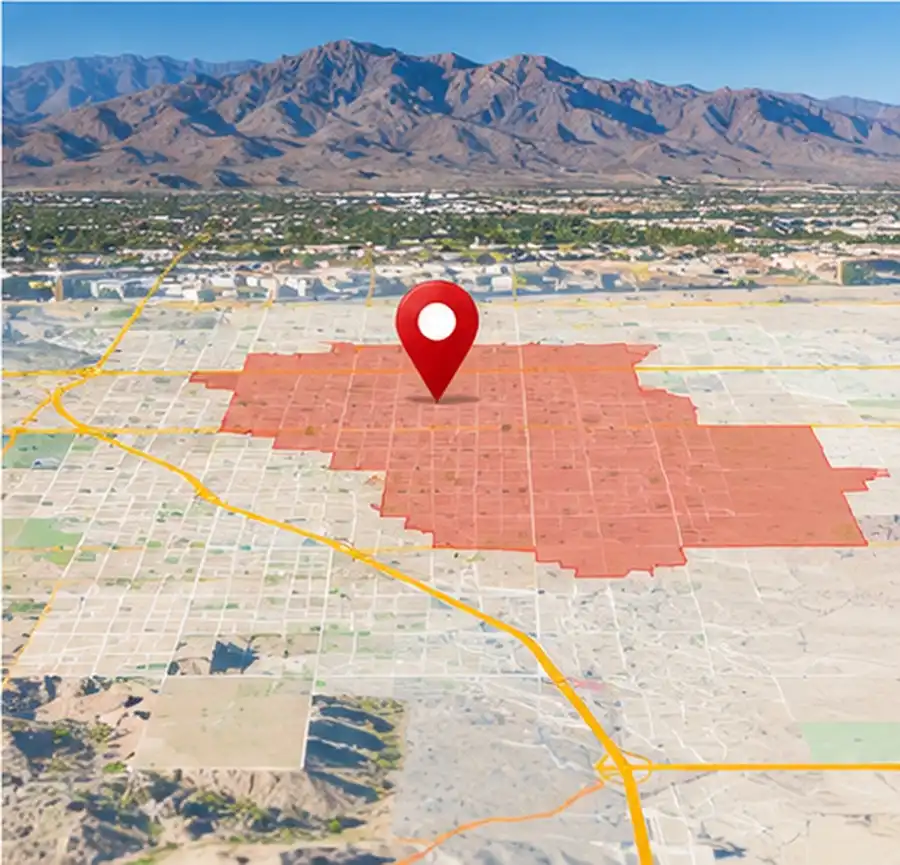
Chandler AZ Pest Control is based at 1425 W. Frye Rd, Chandler, AZ 85224. Our technicians provide AZ centipedes and millipedes pest services to homes and businesses throughout the East Valley.
| City | Common Centipede & Millipede Triggers | What Our Crews Notice |
|---|---|---|
| Chandler | Irrigated yards, block walls | Heavy garage and patio activity |
| Gilbert | Lush landscaping, newer builds | Gaps in fresh stucco and weep screeds |
| Mesa | Older homes, mature trees | Leaf litter and worn door seals |
| Tempe | Dense housing, canals nearby | Moisture near canals and greenbelts |
| Surrounding areas | Desert-edge lots | Higher giant desert centipede counts |
Our crews know how each neighborhood behaves after a monsoon storm. That local knowledge shapes every treatment plan we write.
Full-Service Protection Beyond Centipedes
Centipede and millipede problems rarely travel alone. The gaps they use also let in rodents, roaches, and scorpions. That’s why we look at your home as one connected system.
The same door sweeps and wall sealing that stop centipedes also block mice and roof rats. Ask about our rodent removal and exclusion service if you hear scratching or see droppings. For travelers, rental owners, and multifamily managers, we also offer professional bed bug treatment with clear prep steps and follow-up.
FAQs
Are Arizona centipedes dangerous?
- Bites are painful but rarely dangerous to healthy adults.
- Kids, seniors, and allergy sufferers should seek care for severe reactions.
- The giant desert centipede delivers the most painful bite.
Do millipedes damage homes?
- No structural damage occurs.
- They may nibble seedlings and soft plants.
- Large numbers become a nuisance indoors.
Why do I see more centipedes after rain?
- Flooded soil pushes them upward.
- Prey insects become more active.
- Humid conditions let them travel farther.
Should I keep house centipedes around since they eat other bugs?
- They do eat roaches and silverfish.
- Their presence signals an existing insect problem.
- Treating the prey solves both issues.
How long do professional treatments last?
- Perimeter barriers typically last 60 to 90 days.
- Void dusts can last six months or more.
- Exclusion work lasts years with upkeep.
Are your treatments safe for kids and pets?
- We use EPA-registered products applied by label.
- Technicians explain re-entry times clearly.
- Targeted placement limits exposure in living areas.
How quickly can you schedule service?
- Most visits can be booked within a few days.
- Monsoon season fills up fast, so call early.
- Ask about AZ centipedes and millipedes pest services bundled with scorpion coverage.
The Bottom Line for Arizona Homeowners
Centipedes and millipedes are signs of moisture, entry gaps, and prey insects. Fix those three things, and sightings drop fast. Professional treatment adds the lasting barrier and void protection that store products can’t match.
Start with two steps this week. First, walk your foundation and move any sprinklers wetting the walls. Second, check every door sweep and garage seal for daylight. Small fixes make a big difference.
When sightings keep coming, Chandler AZ Pest Control is ready. Our licensed technicians serve Chandler, Gilbert, Mesa, and Tempe with honest pricing and plain-English advice. Have you noticed more centipedes since the monsoon ended? Reach out, and we’ll help you find the source.