
You paid for treatment. The scorpions came back anyway. Many Chandler homeowners hit this wall. The real problem is usually pest control common failures in older homes. Spray is not the issue. Aging structures, hidden entry points, and mismatched treatments are.
On recent service calls in Chandler, our crews keep finding the same pattern. A home built in the 1970s or 1980s gets a basic perimeter spray. Pests keep pouring in through settled slabs, cracked stucco, and open block-wall cores. The spray is not failing; the house is.
The so-what is simple. Every month of repeat activity costs you money. It also adds property damage and health risk for your family. At Chandler AZ Pest Control, our scorpion control services pair targeted products with sealing work, because spraying alone rarely fixes an older home.
Key Takeaways
- Structural gaps cause most repeat infestations in older homes. Sealing entry points matters as much as any product.
- Each pest needs its own approach. A general spray will not stop bark scorpions, subterranean termites, or German cockroaches.
- Inspections should cover wall voids, attics, plumbing, and block walls. Treating only visible areas leaves breeding sites untouched.
Why Pest Control Common Failures in Older Homes Happen in Arizona
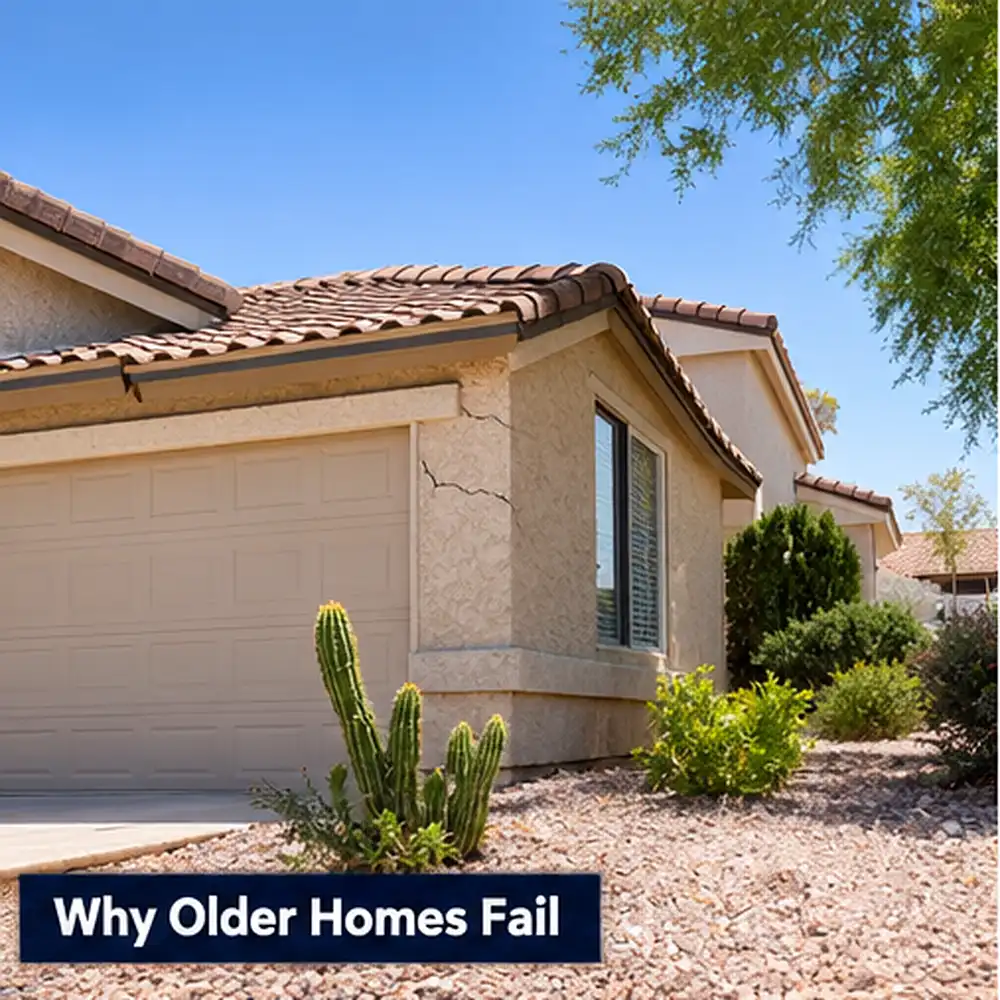
Older homes were built to older codes. Materials break down. Slabs settle. Seals dry out in our heat. Each change opens a new door for pests.
Arizona speeds this up. Summer temperatures above 110°F bake caulk, stucco, and weatherstripping. Monsoon storms then flood yards and push pests indoors to find dry shelter. The University of Arizona Cooperative Extension tracks how monsoon moisture brings some pests to life and forces others inside.
If you’ve spent a summer in the Valley, you know the cycle. Heat cracks the home. Rain fills the cracks with bugs. An aging house simply has more cracks to fill.
How Home Age Shapes Pest Risk in the East Valley
| Build Era | Common Construction Traits | Top Pest Vulnerabilities | Pests We See Most |
|---|---|---|---|
| Pre-1970 | Flood-irrigated lots, wood framing, older plaster | Wood decay, damp soil, plaster cracks | Termites, roaches, scorpions |
| 1970s to 1980s | Block walls, early stucco, cast iron drain lines | Slab cracks, failing weep screeds, open block cores | Scorpions, American roaches, termites |
| 1990s to early 2000s | Tile roofs, stucco over foam, PVC plumbing | Missing bird stops, worn door sweeps, attic gaps | Roof rats, scorpions, spiders |
| 2005 and newer | Tighter seals, pre-treated soil | Utility penetrations, landscaping near walls | Ants, crickets, occasional scorpions |
Mini-summary: The older the home, the more openings, moisture traps, and hiding places pests can use.
Check Also: Does Scorpion Climb Walls? What It Means for Your Chandler Home and How to Stop Them
Top Structural Vulnerabilities in Aging Arizona Homes
Most cases of pest control common failures in older homes trace back to the structure.
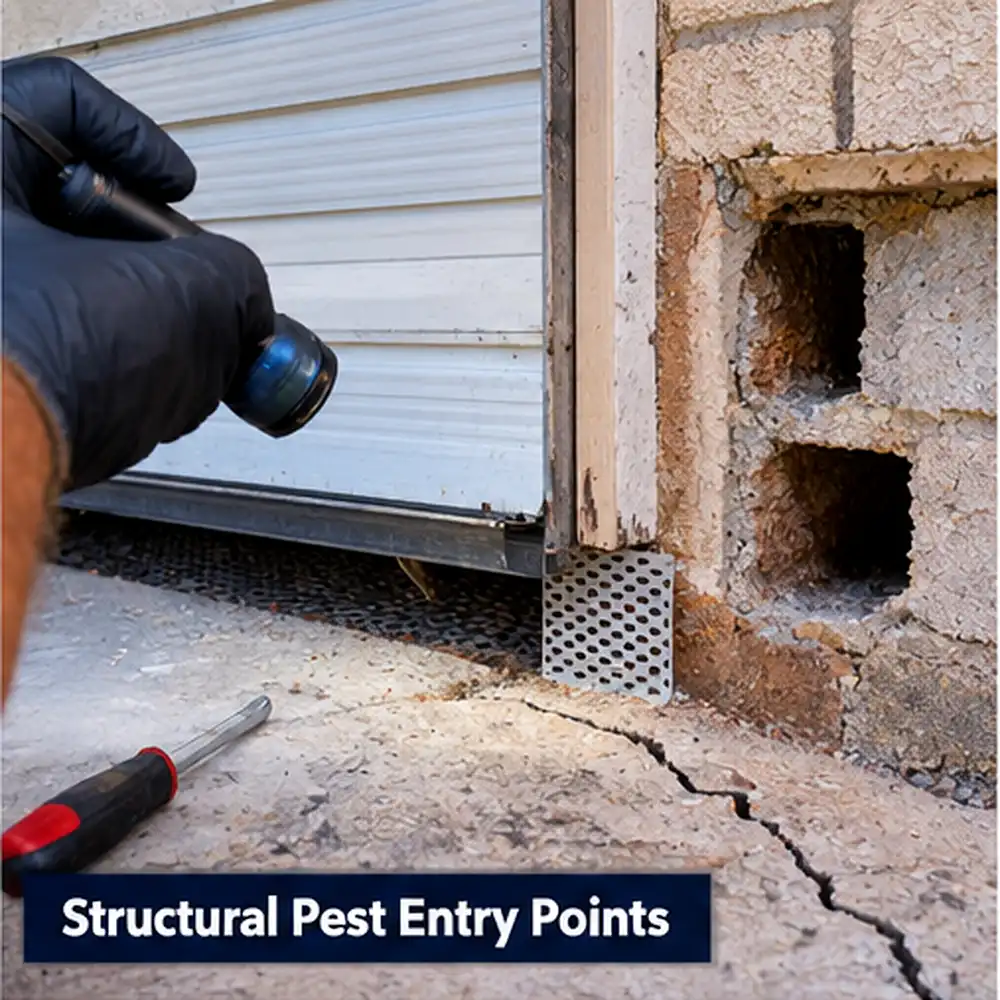
We inspect these six areas first. Each one creates shelter, entry, or moisture. Miss one, and treatment fails.
Foundation and Slab Cracks
- Settling slabs open hairline cracks along the edges.
- Bark scorpions can squeeze through gaps about 1/16 inch wide.
- Subterranean termites build mud tubes up through slab cracks.
- Expansion joints in older patios often have missing or crumbled filler.
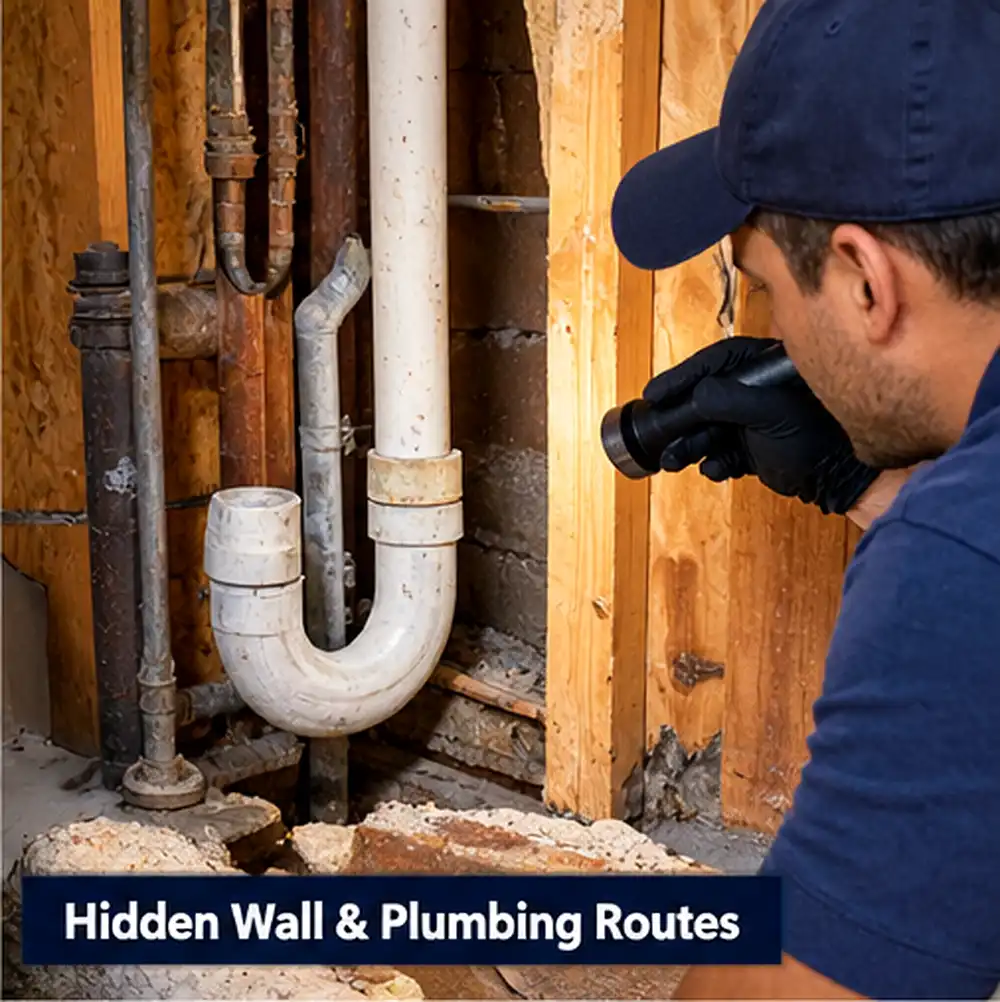
Aged Plumbing
- Cast iron and clay drain lines crack with age.
- Cracked lines let American cockroaches travel from sewers into walls.
- Dry P-traps in guest bathrooms become open roach highways.
- Leaky supply lines create damp wall cavities that termites love.
Wood Decay
- Fascia boards, eaves, and door frames dry out and split.
- Water damage from monsoon runoff softens wood near the ground.
- Untreated framing in pre-1980s homes draws termites.
- Old wood piles and lumber stored against walls add food and shelter.
Deteriorated Weatherstripping
- Sun-baked rubber shrinks and cracks within a few summers.
- Door sweeps wear down and leave a gap at the threshold.
- Garage door seals are the number one scorpion entry point we find.
- Window screens tear and frames warp over decades.
Wall Voids
- Hollow walls act as hidden travel routes between rooms.
- Scorpions, roaches, and roof rats nest inside them.
- Outlets, switch plates, and plumbing cutouts connect voids to living space.
- Surface sprays never reach these spaces.
Block-Wall Gaps
- Our exterminators frequently see this in Arizona block-wall homes.
- Open cores in cinder block walls make perfect scorpion apartments.
- Missing cap mortar and cracked joints give easy access.
- Block walls that touch the house create a direct bridge to the roofline.
Structural Vulnerability Summary
| Vulnerability | Typical Gap Size | Pests That Use It | Best Fix |
|---|---|---|---|
| Slab and foundation cracks | 1/16 to 1/4 inch | Scorpions, termites, ants | Polyurethane sealant, crack injection |
| Plumbing penetrations | 1/4 to 1 inch | Roaches, mice, roof rats | Escutcheon plates, copper mesh, sealant |
| Weep screed gaps | 1/8 to 3/8 inch | Scorpions, crickets, spiders | Weep screed sealing or screening |
| Worn door sweeps | 1/8 to 1/2 inch | Scorpions, mice, roaches | New sweeps and threshold seals |
| Roof tile openings | 1 to 3 inches | Roof rats, birds, bees | Bird stops, eave screening |
| Block wall cores and caps | 1/4 inch and up | Scorpions, rodents | Cap repair, mortar patching |
Check Also: Expert Ant Control Queen Creek Residents Trust to Protect Their Homes
Wrong Products and Incomplete Treatments
Not every failure comes from cracks. Some come from the wrong treatment plan. This is another big driver of pest control common failures in older homes. Old homes have more hiding spots, so shortcuts show up fast.
Wrong Product for the Pest
- General sprays do not kill all pests. Scorpions need targeted, long-lasting formulas.
- German roaches need baits and growth regulators, not just sprays.
- Termites need soil treatments or bait systems, not perimeter spray.
Improper Mixing
- Diluted mixes leave too little active ingredient to work.
- Overmixing creates safety risks for kids and pets.
- The EPA’s Safe Pest Control guidance stresses reading and following product labels exactly.
Incomplete Application
- Skipping wall voids, attics, eaves, and expansion joints leaves breeding sites alive.
- Treating only the front yard ignores back block walls.
- One missed harborage zone can restart an entire infestation.
Sanitation Conflicts
- Baits fail when pests have easier food nearby.
- Pet food, grease, and open trash compete with bait.
- Clutter in older garages gives extra cover to scorpions and rodents.
Insect Resistance
- German roaches, flies, and mosquitoes breed fast and build resistance.
- Using the same product over and over speeds up resistance.
- We rotate product classes to stay ahead of it.
Desert Breakdown Factors
- Intense UV light breaks down many residual products faster.
- Alkaline concrete and stucco can weaken some active ingredients.
- Monsoon rain washes treatments off exposed surfaces.
| Treatment Failure | What Happens | How We Fix It |
|---|---|---|
| Wrong product | Target pest survives and keeps breeding | Identify the species first, then match the product |
| Improper mixing | Weak or unsafe application | Label-exact mixing by licensed techs |
| Incomplete coverage | Hidden colonies survive | Treat voids, attics, eaves, and block walls |
| Poor sanitation | Pests ignore baits | Remove competing food and clutter |
| Resistance | Product stops working | Rotate active ingredients and methods |
| UV and rain breakdown | Residual fades early | Use microencapsulated formulas, retreat on schedule |
How Each Pest Exploits an Older Home
Each pest finds a different weakness. That is why one plan does not fit all. Matching the plan to the pest prevents pest control common failures in older homes. Here is what our service crews notice in the field.
Bark Scorpions
- Arizona bark scorpions climb stucco, walls, and ceilings.
- They hide in block walls, attics, and weep screeds by day.
- They are harder to kill with sprays than most insects.
- Failure mode: spraying without sealing, so new scorpions walk right in.
- What works: sealing, blacklight inspections, and targeted residuals.
Subterranean Termites
- Desert subterranean termites are the most common type we treat.
- They enter through slab cracks, plumbing gaps, and wood-to-soil contact.
- Older homes often have expired soil treatments from decades ago.
- Failure mode: treating visible mud tubes but ignoring the colony.
- Damage often stays hidden until a wall or baseboard goes soft.
If you own an older home, our termite control team can set up liquid barriers or bait monitoring sized to your slab and soil conditions.
Roof Rats and Mice
- Roof rats travel along block walls, citrus trees, and power lines.
- They enter through missing bird stops under roof tiles.
- Mice fit through dime-sized holes. Rats fit through quarter-sized gaps.
- Failure mode: trapping indoors without closing entry points.
Cockroaches
- American roaches rise from old sewer lines and dry drains.
- German roaches live inside kitchens and bathrooms near warmth and food.
- Failure mode: spraying when baits and growth regulators are needed.
- Older cabinets and loose tile create endless hiding cracks.
Bed Bugs
- Bed bugs hide in plaster cracks, loose baseboards, and outlets.
- Older homes have more seams and gaps near sleeping areas.
- Failure mode: treating only the mattress and missing wall gaps.
- Used furniture brought into fixer-uppers is a common source.
Signs of an Infestation by Pest Type
Catching pests early saves money. Use this table during a quick monthly walk-through. Check garages, closets, and under sinks first. Night checks with a blacklight reveal far more scorpions than daytime looks.
| Pest | Visual Signs | Other Clues | Where to Look in Older Homes |
|---|---|---|---|
| Bark scorpions | Glowing under UV light, shed skins | Stings, sightings on ceilings | Garage seals, block walls, closets |
| Subterranean termites | Mud tubes, discarded wings | Hollow wood, bubbling paint | Slab edges, baseboards, door frames |
| Roof rats | Droppings, gnaw marks | Scratching at night, grease marks | Attic, garage rafters, citrus trees |
| Mice | Small droppings, shredded nesting | Chewed food packages | Pantry, under appliances, wall voids |
| American roaches | Large reddish-brown roaches | Musty odor | Floor drains, laundry rooms, garages |
| German roaches | Small tan roaches, egg cases | Pepper-like droppings | Kitchen cabinets, behind fridge |
| Bed bugs | Rust-colored spots, live bugs | Bites in lines or clusters | Mattress seams, baseboards, outlets |
Pest Entry Points: Older vs. Newer Homes
Newer homes have problems too. They are just different problems. Older homes deal with wear and settling.
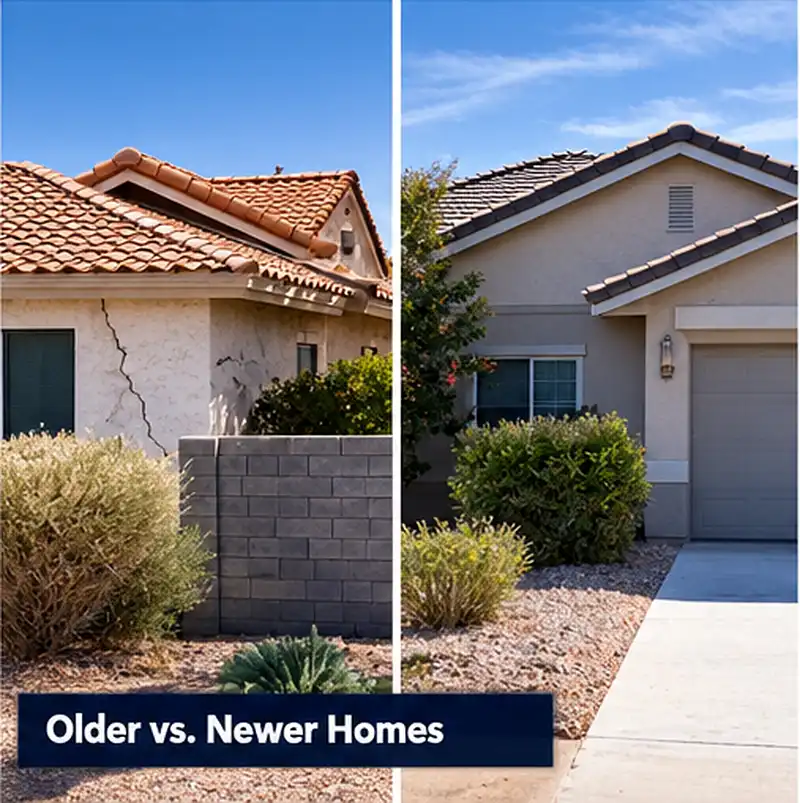
Newer homes deal with construction gaps and disturbed soil.
| Entry Point | Older Homes | Newer Homes |
|---|---|---|
| Foundation | Settling cracks, crumbled expansion joints | Small gaps during initial settling |
| Doors and windows | Warped frames, dried weatherstripping | Tight seals, but screens often missing |
| Plumbing | Cracked cast iron, unsealed penetrations | Unsealed utility lines at install |
| Roof | Missing bird stops, broken tiles | Gaps at vents and eaves |
| Wood | Decayed fascia, untreated framing | Pre-treated lumber, lower risk |
| Soil | Expired termite treatment | Freshly disturbed soil draws termites |
| Walls | Open block cores, stucco cracks | Fewer cracks, newer stucco |
Mini-summary: Older homes need repair-focused pest control. Newer homes need monitoring-focused pest control.
DIY vs. Professional Treatment
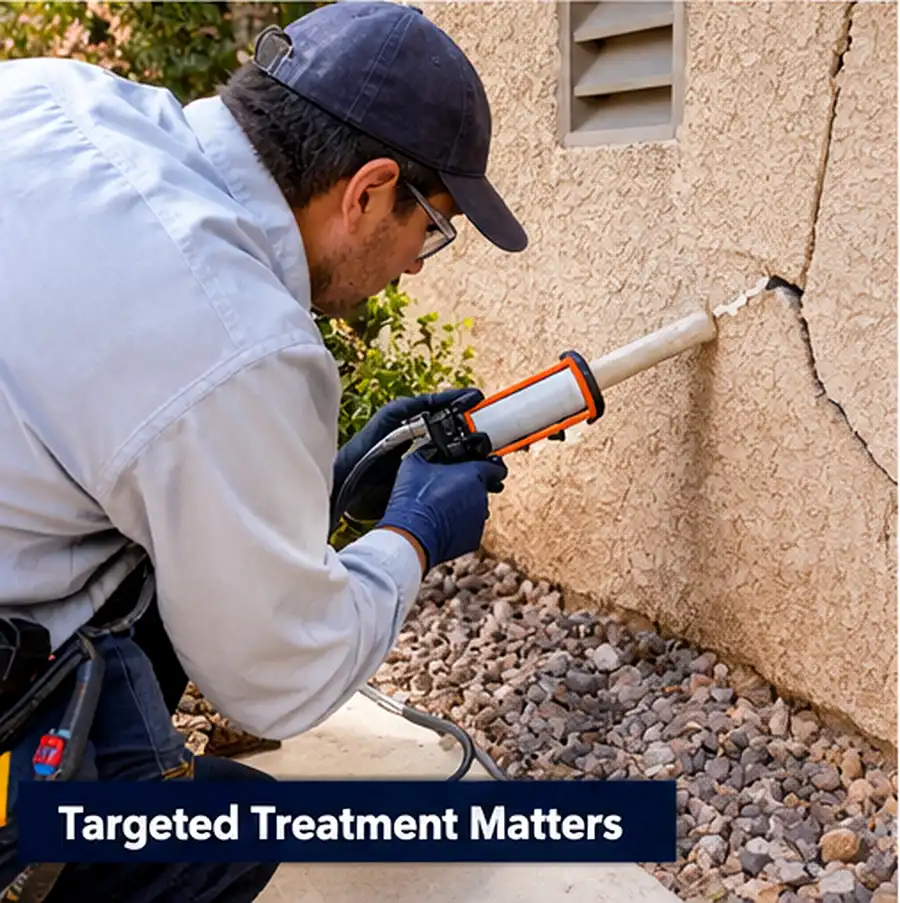
DIY works for small, simple problems. It struggles with pest control common failures in older homes because the causes hide in walls, attics, and soil. Store products also carry lower concentrations than professional formulas. Many callers try DIY first, then call us after a season of frustration.
| Factor | DIY Approach | Professional Treatment |
|---|---|---|
| Product strength | Retail-grade, lower residual | Professional-grade, longer lasting |
| Pest identification | Often guessed | Confirmed by trained techs |
| Wall void access | Rarely possible | Dusts and injection tools |
| Attic and roof inspection | Often skipped for safety | Standard part of service |
| Termite treatment | Limited options | Soil barriers and bait systems |
| Sealing and exclusion | Basic caulking | Targeted, pest-specific materials |
| Safety and label compliance | Mixing errors common | Licensed, label-exact application |
| Typical result in older homes | Short-term relief | Long-term reduction |
DIY Pros
- Lower upfront cost
- Good for small sealing jobs like door sweeps
- Helpful between professional visits
DIY Cons
- Misses hidden harborage in voids and attics
- Risk of wrong product or mixing errors
- Can scatter pests deeper into the home
Professional Pros
- Correct species ID and matched treatment
- Access to professional products and tools
- Service guarantees and scheduled follow-ups
Professional Cons
- Higher upfront cost
- Requires scheduling and home access
Treatment Cost Comparison
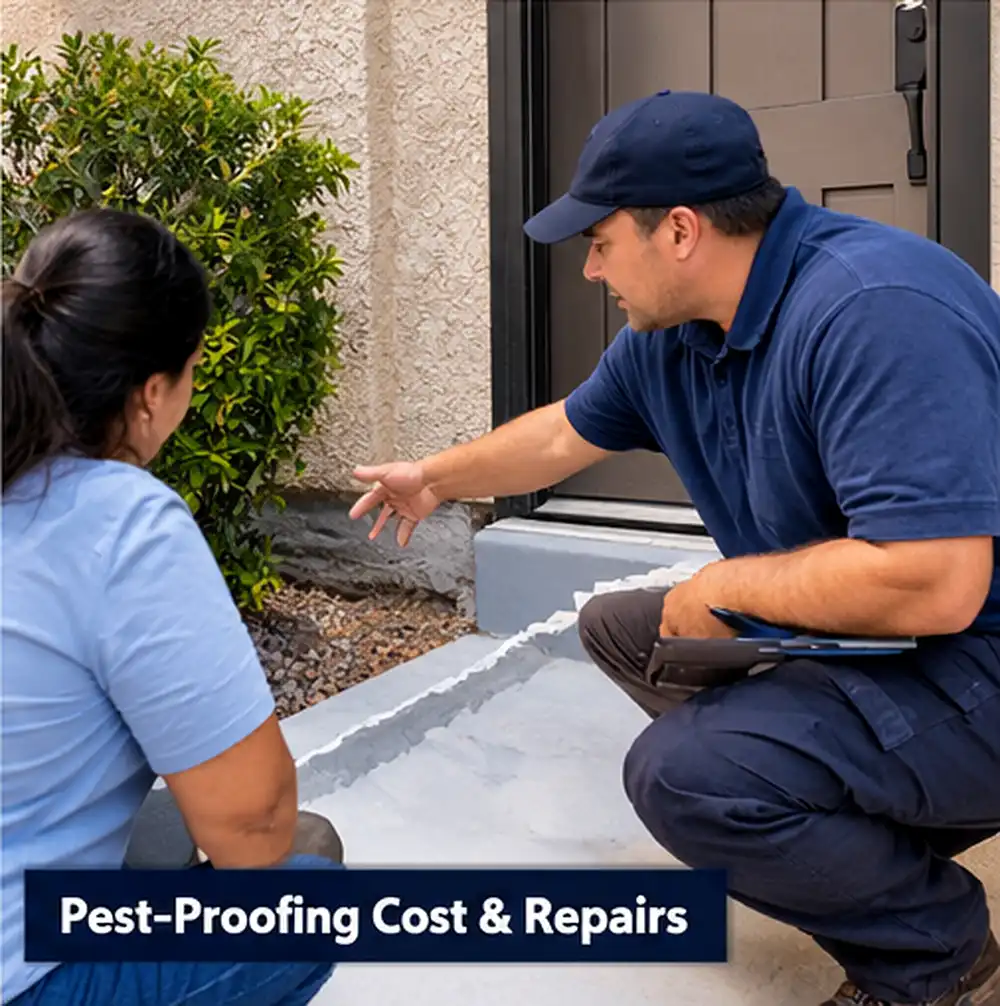
We believe in transparent pricing. Below are typical East Valley ranges. Your price depends on home size, pest pressure, and structural condition. Fixing the root cause early prevents pest control common failures in older homes from turning into repeat bills.
| Service | Typical Cost Range | How Long It Lasts | Damage Risk if Ignored |
|---|---|---|---|
| General quarterly pest service | $90 to $150 per visit | About 90 days per visit | Moderate |
| Scorpion treatment, initial | $150 to $300 | 30 to 60 days | High, sting risk |
| Scorpion sealing | $500 to $1,500+ | Several years with upkeep | High |
| Termite liquid barrier | $800 to $2,500 | Up to 5 to 10 years | Very high, structural |
| Termite bait system | $1,200 to $3,000 plus yearly monitoring | Ongoing with monitoring | Very high |
| Rodent exclusion | $300 to $1,500 | Several years | High, wiring and insulation |
| German roach cleanout | $150 to $450 | 2 to 3 visits to clear | Moderate to high |
| Bed bug heat treatment | $1,000 to $3,000 | Single treatment, plus follow-up | High, spreads fast |
| Bed bug chemical treatment | $300 to $800 per room | 2 to 3 visits | High |
Note: these ranges are estimates. A free inspection gives you an exact number.
Step-by-Step Older Home Pest-Proofing Checklist
This checklist targets the real causes of pest control common failures in older homes. Work through it each spring and again before monsoon season. Small fixes add up to big results.
Exterior Steps
- Seal slab and foundation cracks with polyurethane sealant.
- Screen or seal weep screeds along the stucco base.
- Replace door sweeps and garage door bottom seals.
- Install bird stops under the first row of roof tiles.
- Patch block wall caps and cracked mortar joints.
- Trim trees and shrubs at least 3 feet from the roofline.
- Move wood piles and debris away from walls.
Plumbing and Moisture Steps
- Fix leaky hose bibs and irrigation drips.
- Run water in unused drains weekly to keep P-traps full.
- Seal pipe penetrations under sinks with escutcheon plates.
- Check for soft drywall near tubs and toilets.
- Redirect gutter and roof runoff away from the slab.
Interior Steps
- Seal gaps around outlets, baseboards, and cabinets.
- Store food in sealed containers.
- Declutter garages and closets to remove hiding spots.
- Inspect used furniture before bringing it inside.
- Do a monthly blacklight check for scorpions.
Seasonal Maintenance Calendar
| Season | Main Pest Pressure | Priority Task |
|---|---|---|
| Spring (Mar to May) | Termite swarms, scorpions emerging | Termite inspection, seal entry points |
| Summer (Jun to Sep) | Scorpions, roaches, monsoon bugs | Weep screed sealing, drain checks |
| Fall (Oct to Nov) | Rodents moving indoors | Roof and attic exclusion |
| Winter (Dec to Feb) | Roof rats, German roaches | Attic inspection, kitchen sanitation |
If you find chew marks, droppings, or attic noise, our rodent exclusion service seals roof gaps and wall openings so rats cannot return.
FAQs
Why does pest control stop working in my older home?
- Structural gaps let new pests in faster than treatments can stop them.
- Hidden harborage in walls and attics often goes untreated.
- Sealing plus targeted products solves most cases of pest control common failures in older homes.
How often should an older home be treated?
- Quarterly service suits most homes.
- Homes with heavy scorpion pressure may need monthly visits at first.
- Termite systems need yearly inspections.
Can I seal my home myself?
- Yes, for door sweeps and small caulking jobs.
- Roof tiles, weep screeds, and block walls often need professional tools.
- A missed gap can undo every other repair.
Are older homes more likely to have bed bugs?
- Not because of age alone.
- Older homes have more cracks and seams for bed bugs to hide in.
- Our bed bug eradication service treats beds, baseboards, and wall gaps together.
Do I need a termite inspection when buying an older home?
- Yes. Older soil treatments have likely expired.
- Ask for a wood-destroying insect report before closing.
- Budget for treatment if activity shows up.
Are professional treatments safe for kids and pets?
- Licensed techs follow label directions exactly.
- We use targeted placement in cracks, voids, and baits.
- We share re-entry times before each visit.
Treat the House, Not Just the Bugs
Older homes are not doomed to constant pests. Most repeat problems come from cracks, worn seals, wrong products, and missed hiding spots. Fix those, and treatments start working again. The best results come from pairing repairs with the right plan.
Start with the checklist above this weekend. Then book an inspection to find what you can’t see. At Chandler AZ Pest Control, our general pest management plan combines sealing, targeted treatments, and seasonal follow-ups built for Valley homes.
Call us or stop by 1425 W. Frye Rd in Chandler for a free, honest quote. Which entry point will you check first: the garage door, the weep screed, or the block wall?