
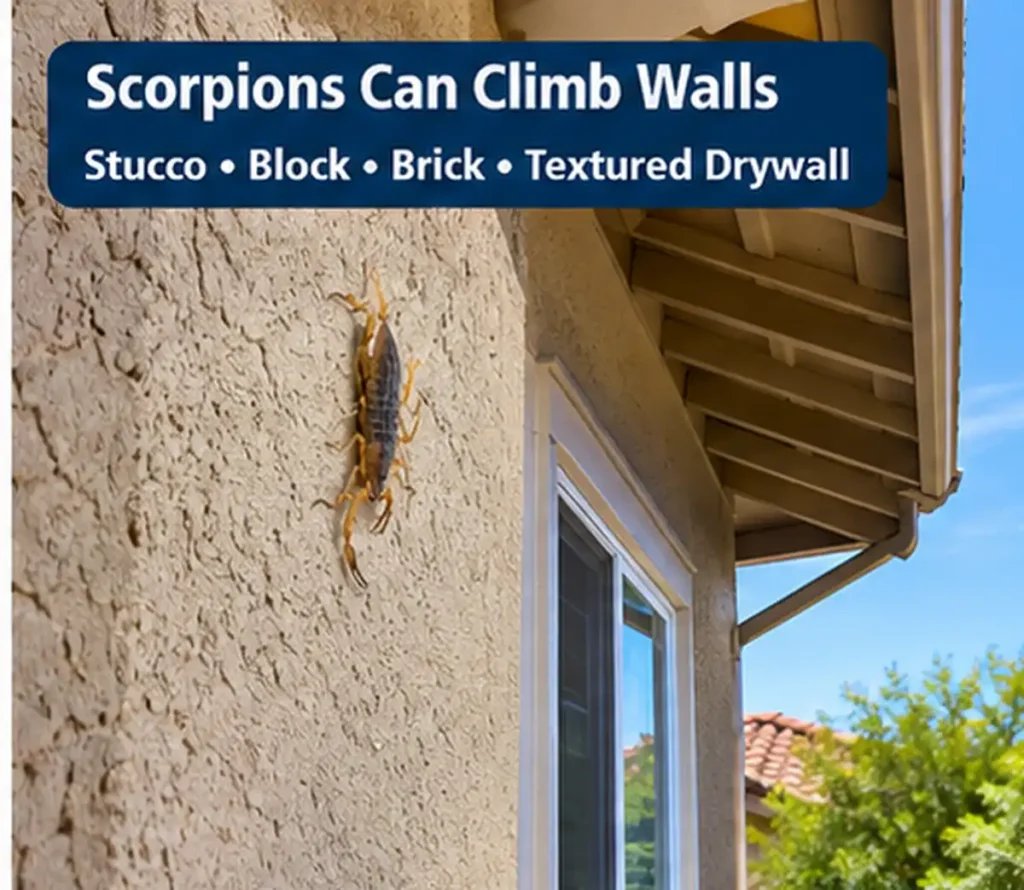
A scorpion on the floor is alarming. A scorpion on your ceiling above the bed is a different problem. Many Chandler homeowners ask us, “Does scorpion climb walls?” The honest answer is yes. The Arizona bark scorpion, the most common scorpion in Valley homes, is a skilled climber. It can scale stucco, block walls, brick, and textured drywall, then hide in attics or drop from ceilings. That means ground-level barriers alone won’t protect your family. Our scorpion control programs are built around this climbing behavior, and this article explains why.
Key Takeaways
- Arizona bark scorpions climb rough and textured surfaces such as stucco, brick, block walls, wood, and textured drywall. They cannot grip clean glass, glossy tile, or polished metal.
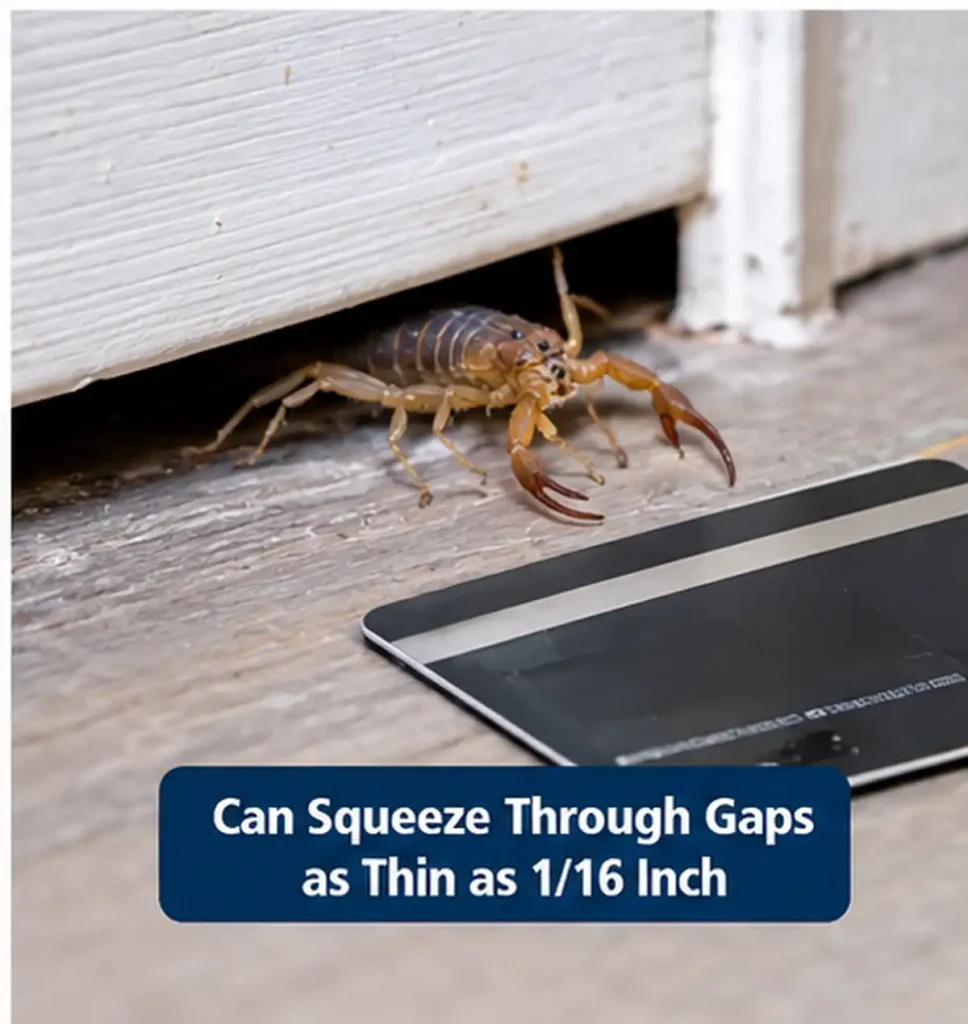
- Scorpions squeeze through gaps as thin as 1/16 of an inch, about the thickness of a credit card. Sealing entry points matters more than spraying alone.
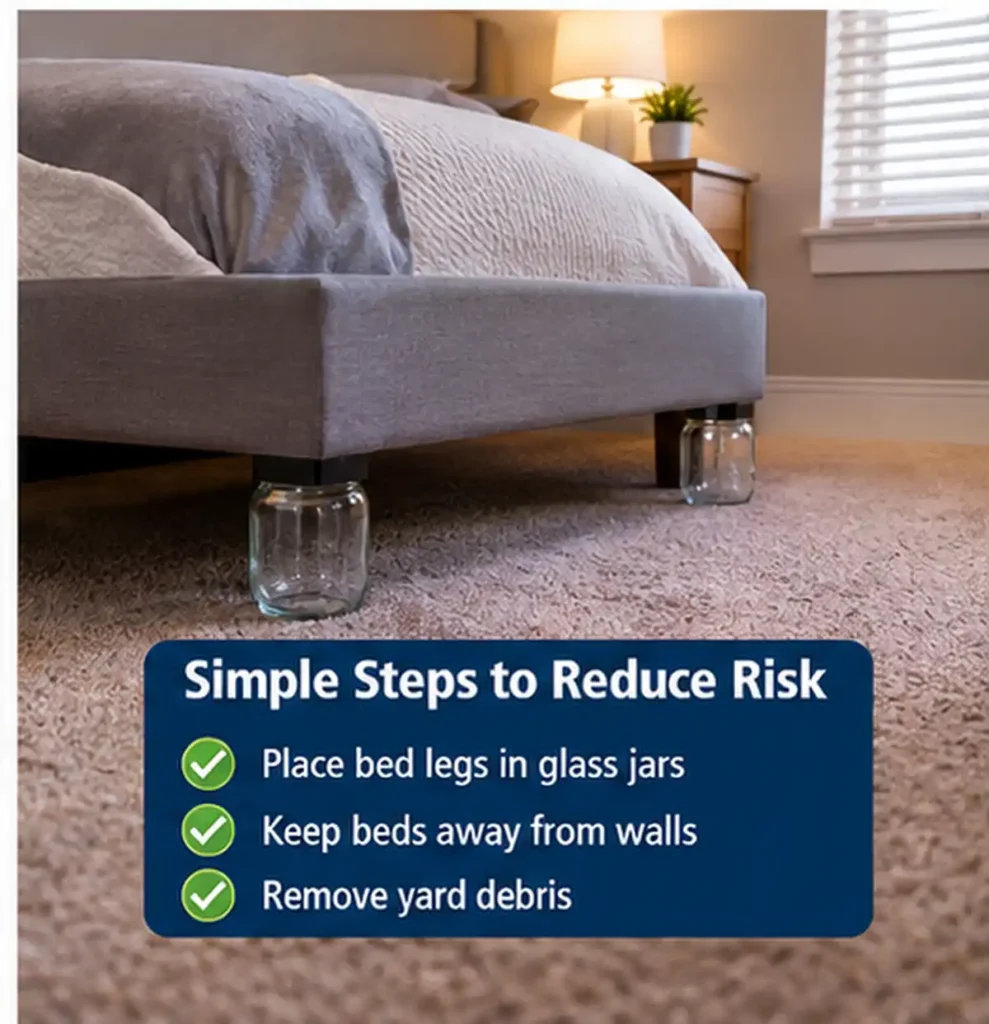
- Placing bed legs in glass jars, pulling beds away from walls, and removing yard debris cut sting risk right away.
Does Scorpion Climb Walls? The Short Answer from the Field
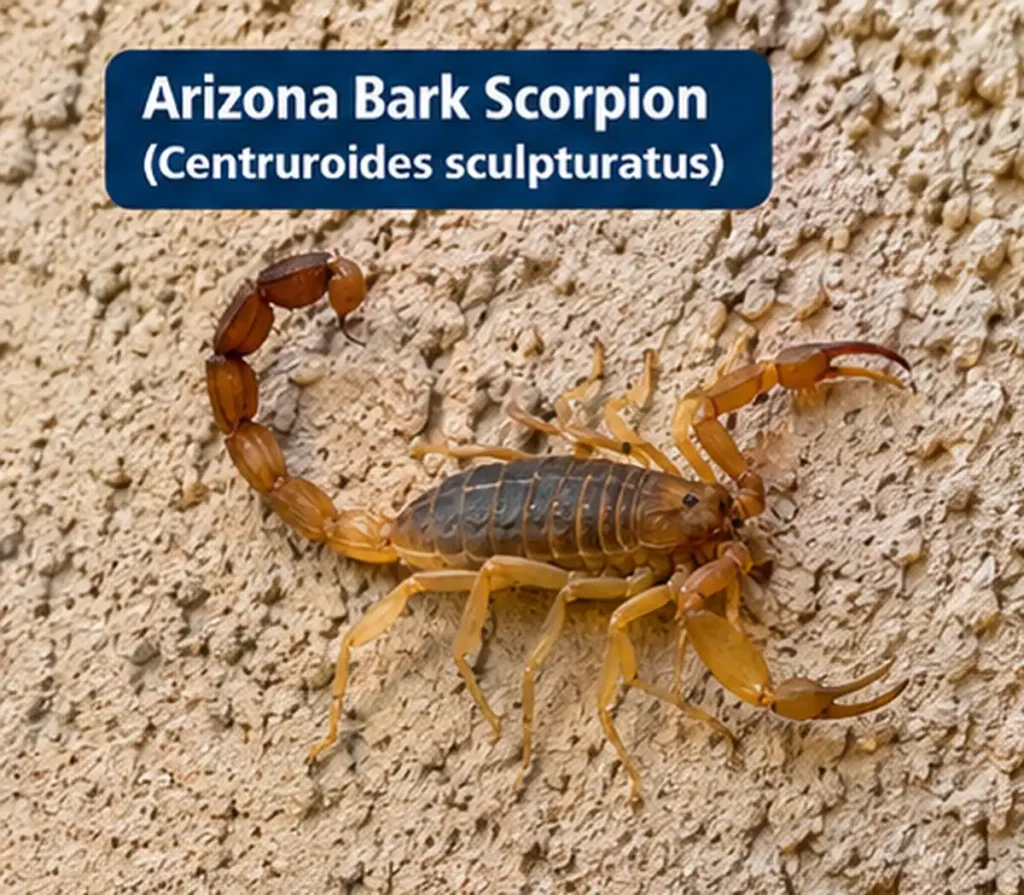
Yes, many scorpions can climb walls. But not every species climbs well. Not every surface gives them a grip either.
In the Phoenix metro area, the Arizona bark scorpion (Centruroides sculpturatus) is the climber you need to worry about. It’s also the most venomous scorpion in the United States. On recent service calls in Chandler, we’ve found bark scorpions on ceilings, window frames, curtain rods, and bathroom walls.
Other local species, like the desert hairy scorpion, are heavier and tend to stay on the ground. They burrow. They don’t climb well.
So what? If you have bark scorpions, your home’s walls and ceilings count as pest pathways. They’re not just barriers.
How Scorpion Anatomy Makes Wall Climbing Possible
A big part of why the answer to “does scorpion climb walls” is yes comes down to their legs. Scorpions have eight legs, and each one ends in tiny tools built for grip.

Tarsal Claws
Each leg tip has small, curved claws. These hook into tiny cracks and bumps on rough surfaces. Stucco and block walls are full of these grip points.
Sensory Hairs (Setae)
Scorpion legs are covered in fine hairs called setae. These hairs add friction and help them feel the surface texture. They also detect vibration, which helps scorpions sense prey and danger.
Lightweight, Flat Body
Bark scorpions are slender and light, usually 2 to 3 inches long. Their flat bodies slip into cracks, weep holes, and gaps under doors. Less weight means their claws hold them upright and even upside down.
| Body Feature | What It Does | Why It Matters for Your Home |
|---|---|---|
| Tarsal claws | Hook into rough textures | Lets them scale stucco and block walls |
| Setae (leg hairs) | Add grip and sense vibrations | Helps them move across ceilings |
| Flat, slim body | Fits tight spaces | Enters through 1/16-inch gaps |
| Light body weight | Reduces pull from gravity | Allows upside-down travel |
| Exoskeleton (glows under UV) | Protects body, fluoresces | Makes blacklight inspections effective |
Which Surfaces Can Scorpions Climb?
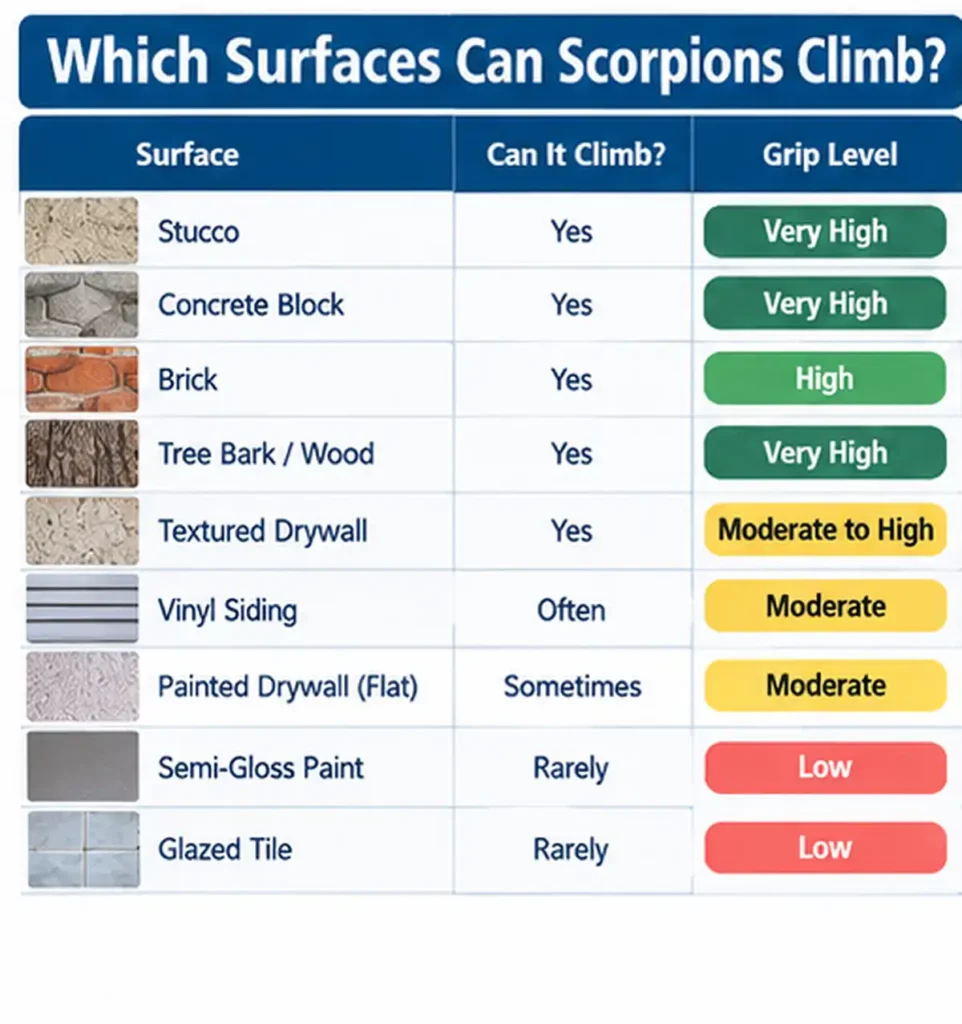
Texture is everything. Rough surfaces give claws something to catch. Smooth surfaces give them nothing.
Our exterminators frequently see this in Arizona block-wall homes. Bark scorpions travel along the top of block fences, then cross to the house on branches or rooflines. If you’re still asking whether a scorpion climbs walls around your property, check your fence caps at night with a blacklight.
Surface Climbability Comparison
| Surface | Can Bark Scorpions Climb It? | Grip Level | Field Notes |
|---|---|---|---|
| Stucco | Yes | Very High | Most common Valley exterior. Easy highway to eaves and attics. |
| Concrete block (CMU) | Yes | Very High | Fence tops act as travel routes between yards. |
| Brick | Yes | High | Mortar joints give extra grip. |
| Tree bark / wood | Yes | Very High | Named “bark” scorpions for a reason. |
| Textured drywall | Yes | Moderate to High | Orange-peel and knockdown textures are climbable. |
| Vinyl siding | Often | Moderate | Textured vinyl works. Gaps behind siding offer hiding spots. |
| Flat or satin painted drywall | Sometimes | Moderate | Depends on texture beneath the paint. |
| Semi-gloss paint | Rarely | Low | Harder but not impossible, especially near corners. |
| Glazed ceramic tile | Rarely | Low | Grout lines can give small footholds. |
| Clean glass | No | None | Classic trap. This is why glass jars work. |
| Polished metal | No | None | Smooth stainless steel stops them cold. |
| Smooth plastic | No | Very Low | Scorpions often get stuck in bathtubs and sinks. |
Why Scorpions End Up in Bathtubs
Homeowners often find scorpions trapped in tubs and sinks. They climb in chasing moisture. Then the smooth porcelain keeps them from climbing out.
That’s a clue, not a coincidence. A scorpion in the tub often means they’re coming through drains, plumbing gaps, or walls nearby.
Why Dust and Dirt Change the Rules
Here’s something many sources skip. Dusty glass or dirty windows can give scorpions enough grip to climb. Spider webs help too.
Clean surfaces matter. A grimy window screen is climbable. A clean glass pane usually isn’t.
Arizona Scorpion Identification Guide
Not every scorpion in your yard climbs the same way. Knowing the species helps us pick the right treatment.
| Species | Size | Color | Climbing Ability | Venom Risk | Where We Find Them |
|---|---|---|---|---|---|
| Arizona bark scorpion | 2–3 in. | Tan to light yellow, slender tail | Excellent | High (medically significant) | Walls, ceilings, attics, trees, block fences |
| Desert hairy scorpion | 4–6 in. | Yellow body, dark back, hairy tail | Poor | Low to moderate | Burrows, under rocks, open desert lots |
| Stripetail scorpion | 2–2.5 in. | Brown with dark stripes | Poor to fair | Low | Under debris, rocks, landscape edging |
| Yellow ground scorpion | 2–3 in. | Pale yellow, stocky | Poor | Low | Sandy soil, ground level |
When someone asks us “does scorpion climb walls,” our first question back is which scorpion? If it’s a bark scorpion, expect vertical activity. If it’s a desert hairy, focus on ground entry points.
According to the University of Arizona Cooperative Extension, the bark scorpion is the only Arizona species with venom considered potentially life-threatening. Young children, older adults, and pets face the highest risk.
How Scorpions Get Inside Your Home
Climbing ability opens up entry points most people never check. Scorpions don’t need a big opening. They need a gap and a reason.
Top Entry Points We Find on Service Calls
- Gaps under exterior doors with worn or missing door sweeps
- Weep holes in stucco and block walls
- Roofline gaps where stucco meets fascia or roof tile
- Attic vents with torn or loose screens
- Plumbing and electrical penetrations around hose bibs, AC lines, and cable wires
- Window frames with cracked caulk or damaged screens
- Garage door seals that don’t touch the slab evenly
- Dryer vents without proper flaps
Scorpion Entry Point Risk Table
| Entry Point | Typical Gap Size | Risk Level | Fix |
|---|---|---|---|
| Door bottoms | 1/8–1/2 in. | Very High | Door sweep + threshold adjustment |
| Weep holes | 3/8 in. | High | Stainless mesh weep screens |
| Roof tile edges | Varies | High | Bird stop / eave sealing |
| Utility penetrations | 1/16–1/2 in. | High | Silicone caulk or expanding foam |
| Window frames | 1/16–1/4 in. | Moderate | Re-caulk + screen repair |
| Attic vents | Varies | Moderate | Fine mesh screening |
| Garage doors | 1/4–1 in. | Very High | Replace bottom seal + side weatherstrip |
What Draws Them Inside
Scorpions come indoors for three reasons: food, water, and shelter. They eat crickets, roaches, and silverfish. If you have those insects, scorpions follow.
If you’ve spent a summer in the Valley, this scorpion prevention strategy makes complete sense. Monsoon season triggers insect blooms. More bugs means more hungry scorpions. And the extreme heat pushes scorpions toward cooler, moister spaces, like your home.
Our Scorpion Control service targets these exact gaps. We seal the building so climbing scorpions have nowhere to go once they reach your walls.
Seasonal Scorpion Activity in Chandler
Scorpion pressure isn’t the same all year. Here’s what our crews see by season.
| Season | Months | Activity Level | Behavior |
|---|---|---|---|
| Spring | March–May | Rising | Emerge from winter hiding, begin mating |
| Summer | June–August | Peak | Hunting at night, moving indoors to escape heat |
| Monsoon | July–September | Very High | Chasing insect blooms, seeking dry shelter |
| Fall | October–November | Moderate | Still active on warm nights, seeking winter spots |
| Winter | December–February | Low | Clustering in walls, attics, and block fences |
Winter doesn’t mean they’re gone. Bark scorpions often group together in wall voids and attics. That’s why year-round treatment matters.
Why Scorpions on Your Ceiling Are a Real Risk
Scorpions on the ceiling aren’t hunting you. But they can lose their grip and fall. We hear this story often.
Sting risk rises when scorpions are overhead. They can drop onto beds, couches, and cribs. Many stings happen at night, when people roll over or step barefoot on a fallen scorpion.
Common Sting Scenarios
- Rolling onto a scorpion that fell into bedding
- Putting on shoes or clothes left on the floor
- Reaching into dark cabinets or closets
- Walking barefoot at night on tile floors
- Grabbing towels that hung near a wall
What to Do if Stung
- Stay calm and wash the area with soap and water.
- Apply a cool compress for 10 minutes at a time.
- Call Poison Control at 1-800-222-1222 for guidance.
- Seek emergency care right away for children, older adults, or anyone with trouble breathing, muscle twitching, or roving eye movements.
Steps to Scorpion-Proof Your Home
Since scorpions climb walls, your defense has to cover ground level and up high. We break prevention into three zones.
Zone 1: Yard and Landscape
- Remove rock piles, woodpiles, and debris near the foundation.
- Trim tree branches and shrubs at least 12 inches from walls and roofs.
- Keep palm trees trimmed, since dead fronds hide large scorpion groups.
- Move firewood at least 20 feet from the house.
- Fix leaky irrigation and drippers near the foundation.
- Switch outdoor lights to yellow bulbs to attract fewer insects.
Zone 2: Exterior Structure
- Install door sweeps on every exterior door.
- Screen weep holes with stainless steel mesh.
- Caulk cracks in stucco and around windows.
- Seal gaps around pipes, AC lines, and wires.
- Replace garage door seals that are worn or uneven.
- Check roof tile edges for open gaps.
Zone 3: Indoors
- Pull beds 6 inches away from walls.
- Keep bedding off the floor, including bed skirts.
- Place bed legs in clean glass jars.
- Shake out shoes, towels, and clothes before use.
- Reduce clutter in closets and garages.
- Run a blacklight check at night along walls and baseboards.
Pros and Cons of the Glass Jar Method
Pros:
- Cheap and easy to set up
- Works because scorpions can’t grip clean glass
- Gives peace of mind at night
Cons:
- Fails if bedding touches the floor or walls
- Doesn’t stop scorpions falling from the ceiling
- Jars must stay clean and dust-free
DIY vs. Professional Scorpion Treatment
Scorpions are tough. They can survive months without food. Many store-bought sprays don’t hold up against them either. Their bodies sit high off the ground, so they often avoid treated surfaces.
Here’s how DIY compares to professional care.
| Factor | DIY Treatment | Professional Treatment |
|---|---|---|
| Product strength | Limited retail products | Professional-grade residuals and dusts |
| Wall void treatment | Rarely possible | Dust applied inside walls and voids |
| Entry point sealing | Basic caulk and sweeps | Full exclusion including roofline and weep holes |
| Blacklight hunting | Possible with practice | Trained techs know hot spots |
| Treatment lifespan | Days to 2 weeks | 30 to 90 days depending on product and weather |
| Monsoon response | Reactive | Scheduled before peak season |
| Attic treatment | Risky and hard to reach | Safe, targeted application |
| Upfront cost | Low | Moderate |
| Long-term results | Inconsistent | Steady reduction over time |
When DIY Makes Sense
- You see one scorpion a year or less.
- You have no young kids or pets.
- You’re willing to seal gaps yourself.
When to Call a Pro
- You see scorpions weekly or on walls and ceilings.
- You find them in bedrooms or nurseries.
- Your home backs up to desert, washes, or open lots.
- You’ve had a sting in the household.
For more on species behavior and treatment options, the National Pest Management Association offers helpful guidance.
Scorpion Treatment Cost Comparison
We believe in transparent pricing. Below are typical price ranges we see across the East Valley. Your exact cost depends on home size, lot type, and infestation level.
| Service | Typical Price Range | What’s Included | How Long It Lasts |
|---|---|---|---|
| One-time scorpion treatment | $150–$300 | Interior/exterior spray, eave treatment | 30–60 days |
| Monthly scorpion service | $50–$100/month | Recurring treatment, re-service between visits | Ongoing |
| Blacklight scorpion hunt | $100–$250 | Night inspection and removal | One visit |
| Scorpion sealing (exclusion) | $800–$2,500+ | Weep screens, sweeps, caulking, roofline sealing | Years with upkeep |
| Attic dusting | $150–$350 | Dust applied in attic and wall voids | 6–12 months |
| DIY supplies | $50–$200 | Sprays, caulk, sweeps, blacklight | Short-term |
Sealing costs more upfront but often saves money long-term. Fewer scorpions get in, so you need fewer follow-up treatments.
Common Mistakes Homeowners Make
On recent service calls in Chandler, we see the same mistakes again and again.
| Mistake | Why It Fails | Better Approach |
|---|---|---|
| Spraying only baseboards | Scorpions climb above treated zones | Treat eaves, walls, and attics too |
| Ignoring block fences | Fences act as scorpion highways | Inspect and treat fence lines |
| Using sticky traps only | Traps catch a few, not the source | Combine traps with sealing |
| Leaving bedding on the floor | Creates a climbing bridge | Tuck sheets and skip bed skirts |
| Skipping winter service | Scorpions cluster in walls | Keep year-round protection |
| Killing insects but not sealing | New scorpions keep entering | Exclusion plus treatment |
FAQs
Does scorpion climb walls inside the house too?
Yes. Bark scorpions climb interior walls, especially textured drywall. They often move along corners and baseboards first, then climb to ceilings.
Can scorpions climb glass?
Not clean glass. Smooth glass gives their claws nothing to grip. Dusty or webbed glass may give them some footing.
Can scorpions climb into my bed?
They can if bedding touches the floor or wall. They can also fall from the ceiling. Pull the bed away from walls and use glass jars under the legs.
Do scorpions climb trees?
Yes. Bark scorpions love trees, especially palms and mesquites. Branches touching your roof give them a direct path into the attic.
How small of a gap can a scorpion fit through?
A bark scorpion can squeeze through about 1/16 of an inch. That’s roughly the thickness of a credit card.
Are scorpions more active after monsoon storms?
Yes. Storms flush insects out and flood burrows. We see activity spikes in the days after heavy rain.
Do blacklights really work?
Yes. Scorpions glow blue-green under UV light. A night inspection shows you where they travel on walls, fences, and patios.
Will one scorpion mean an infestation?
Not always. But bark scorpions live in groups. Where you see one, others are often nearby, especially in wall voids and attics.
Protect Every Level of Your Home
So, does scorpion climb walls? For Arizona bark scorpions, the answer is a firm yes. They climb stucco, block, brick, and textured drywall. They reach attics and ceilings. And they slip through gaps most people never notice.
The best defense works on every level:
- Clear the yard of debris and trim trees back from the house.
- Seal entry points from the foundation to the roofline.
- Protect beds with jars and space from the walls.
- Treat year-round, with extra focus before monsoon season.
At Chandler AZ Pest Control, we pair treatment with sealing for lasting results. Our general pest control services also cut down the crickets and roaches that scorpions feed on. Fewer insects means fewer reasons for scorpions to move in.
While we inspect your roofline and walls, we also check for signs of subterranean termites, since both pests exploit the same gaps. If we spot mud tubes, our termite control team can handle it on the same visit.
Managing an office, rental, or HOA property? Our commercial pest control plans protect tenants, staff, and customers across Chandler, Gilbert, Mesa, and Tempe.
Call us or stop by 1425 W. Frye Rd, Chandler, AZ 85224 to schedule a scorpion inspection. We’ll show you exactly where they’re climbing and how to stop them.